We use cookies to enhance your experience, analyze traffic, and personalize ads. Please accept or manage your preferences.
Venue listings can show a building as open without confirming that its pokies area is available.
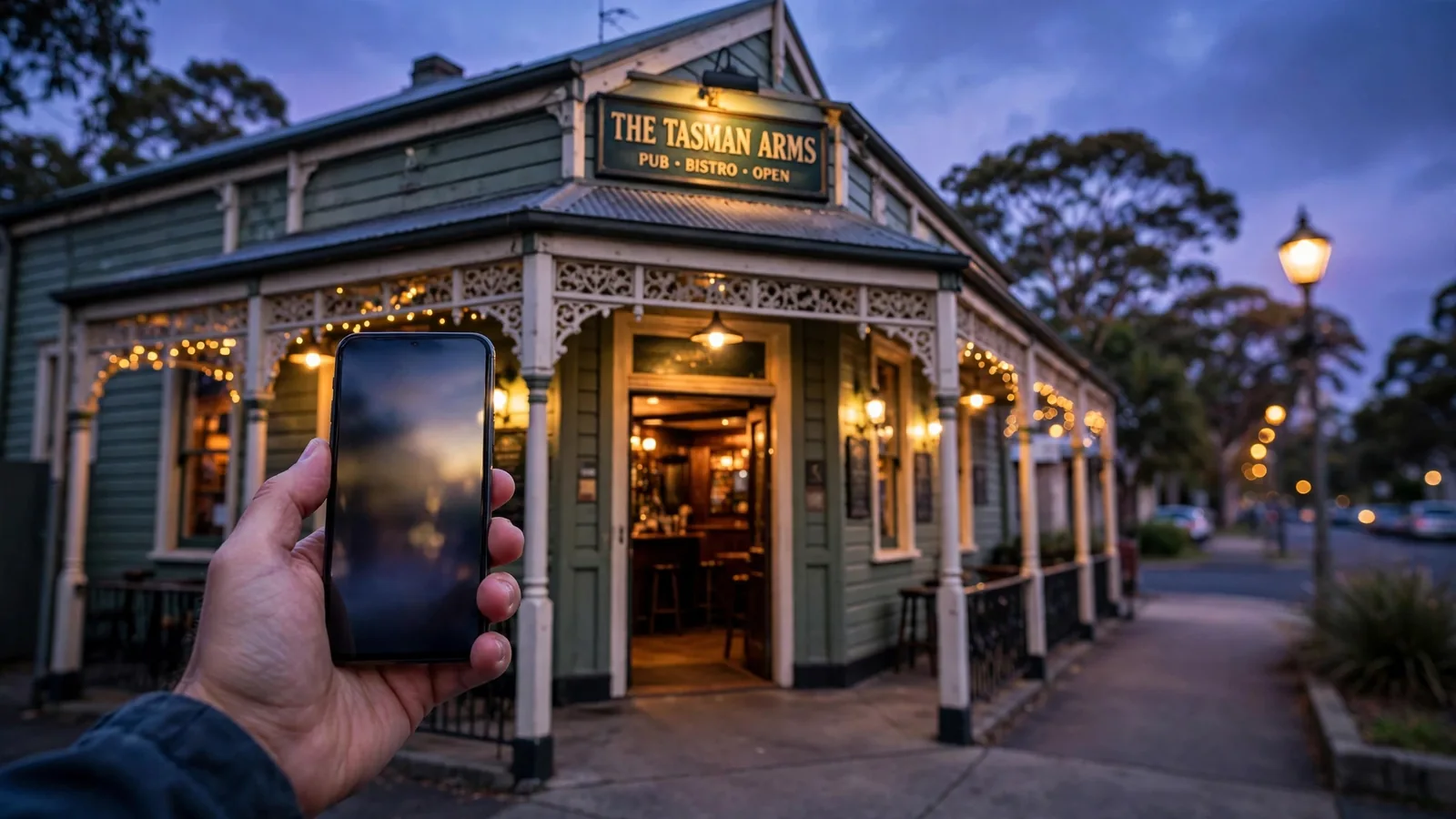
If you’re planning to visit a pokie venue in Tasmania, check that it is open before you set off. A result saying “open now” is a useful lead, not a guarantee that the gaming area is available when you arrive. Listings can be out of date, and a venue’s general status may not answer the question you actually have: can you use the pokies at this moment?
I’d start with the venue’s own website or its official social page, then call if the information is unclear. Look for a recent update rather than relying on a line copied across several directory sites. If you can’t find a direct answer, ask plainly whether the gaming area is open now. That is more useful than asking only whether the building is open; a restaurant, bar or other part of a venue may be operating while the area you’re heading for is not.
A map result can help you spot a venue listing, but it should not be your final check. The displayed status might not reflect a change made by the venue, and a listing may refer to the premises as a whole rather than the pokies. Check the business name and the details on the venue’s own page, especially if several results look similar.
When you call, keep it practical. Ask whether the pokies are operating at the time you expect to arrive, and whether anything affecting access has changed today. If you’re already on the way, mention that; there is little value in relying on an answer about a different part of the day. If nobody answers, look for a current official update or reconsider making the trip until you can confirm.
This matters particularly when you’re setting out early or planning to go late. Searches for early-morning or late-night access can turn up pages that describe a venue generally, not the current status of its gaming area. Don’t read an old listing as confirmation. A quick direct check beats a long detour.
Searching for pokies in Tasmania can bring up venues, directory pages, old posts and unrelated results together. Open the result that appears to belong to the venue itself, not just the one with the most convenient snippet. Check that the page gives a Tasmanian address and current contact details before you use it to plan a visit.
The same goes for a search that includes a well-known casino name alongside Tasmania. Don’t assume the wording proves that the named brand operates a Tasmanian venue. Check the exact venue identity and its official details. If the result does not clearly identify a physical place in Tasmania, it has not answered your question.
It’s also worth checking the date of any post or notice. A page can remain visible long after its information has stopped being useful. If the last update is old, the contact details are missing, or the page sends you in circles, treat that as uncertainty rather than confirmation. You need a current answer about the visit you intend to make.
Before heading out, confirm three things: that you have the right venue, that its gaming area is available when you plan to arrive, and that you have a reliable way to contact it if plans change. You do not need to collect a pile of screenshots; one clear, current confirmation is more useful than several vague listings.
If you’re going with someone else, agree on the plan before travelling. If the venue cannot confirm access, choose whether to wait, call again later or abandon the trip. Don’t let the effort already spent getting ready make the decision for you. A closed door is a poor reason to keep searching in a hurry.
Pokies are for adults aged eighteen and over in Australia. If you choose to gamble, tools such as deposit limits, loss limits, session time limits and self-exclusion can help you set boundaries. Think about those choices before you arrive, rather than making them in the moment. Checking that a venue is open is only a practical step; it is not a reason to spend more time or money than you intended.
A direct check takes little effort, and it can save a wasted journey. If the answer is unclear, don’t guess. Better to pause than turn “open now” into a hopeful assumption.
If you’re looking for pokies options in Tasmania in 2026, use this list to focus on the details provided for each operator, such as licensing, minimum deposits and payout times. Check which of those details matter most to you before choosing.
Uptown Pokies
Uptown Pokies has operated since 2017 and lists a Curacao licence. Its minimum deposit is A$20.
Neospin
Neospin lists a Curacao Gaming Control Board licence, OGL/2023/176/0095, held by Hollycorn N.V.
Playfina Casino
Playfina Casino lists a Curacao eGaming licence and has operated since 2017 under Hollycorn N.V. Its minimum deposit is A$20–30, depending on the offer.
JustCasino
JustCasino lists a Curacao Gaming Control Board licence. That licensing detail is the available point of reference for this listing.
SkyCrown
SkyCrown lists a Tobique Gaming Commission licence and a A$30 minimum deposit. Its stated payout times are around 10–15 minutes for crypto and 1–5 days for fiat.
WinSpirit Casino
WinSpirit Casino lists a Curacao eGaming licence, OGL/2024/923/0383, held by Antillephone N.V. Its minimum deposit is A$30.
Ricky Casino
Ricky Casino lists a A$20 minimum deposit, or A$30 to qualify for the bonus. Stated payout times are under 1 hour for crypto and 1–3 business days for PayID.
Wild Tokyo
Wild Tokyo lists a Curacao licence and a A$10 minimum deposit. Its stated payout times are 30–60 minutes for crypto and 1–5 days for fiat.
7Bit Casino
7Bit Casino is operated by Dama N.V. and lists a Curacao licence.
MrPacho
MrPacho lists payout times of 30–120 minutes for crypto and 24–72 hours for fiat. Its minimum deposit is A$30.
“Best” sounds like a clear verdict, but it can mean different things: a game you enjoy, one with features you like, or one described as paying well. Those are not the same measure. If you’re comparing Tasmanian pokies, start by asking what the claim is actually based on. A confident label alone tells you very little.
A common comparison point is return to player, or RTP. It describes the proportion of wagers a game is designed to return over extensive play, rather than promising what you will get from a particular session. Treat it as a setting attached to the game at a particular casino, not an unchanging quality of the game wherever it appears.
A specialist review reports that some providers let casinos choose between different RTP settings for the same pokie. That means the title alone may not tell you which return setting applies at a particular venue. If someone calls a game one of the best-paying pokies in Tasmania, the useful follow-up is whether the claim identifies the setting and where it applies. Without that context, a comparison can sound more precise than it is.
Even a clearly stated RTP is not a forecast for your next visit. It describes a theoretical return across a very large number of plays, not a schedule for individual outcomes. You might see a run of wins, a run without them, or a mixed session; none of those short stretches establishes what the game will do next.
That distinction matters because every spin is generated independently. A Random Number Generator determines the outcome, so the previous result does not make a particular result due. A pokie that has not paid recently is not thereby “ready” to pay, and a recent win does not mean the next spin is more likely to lose. Past outcomes do not provide a reliable signal for the next one. No pattern to read.
This is where claims about the best pokies in Tasmania can blur two separate ideas. A game may have a return setting that looks stronger in a comparison, while still producing unpredictable individual results. And a game’s setting does not make a short session predictable. “Best paying” should never be read as “likely to pay me now.”
If you see a comparison, check what it is comparing: the same title at different casinos, different games, or simply someone’s personal preference. Also look for whether the return information is tied to the specific version or setting being discussed. If the claim gives no such detail, it is hard to use as a like-for-like comparison. The name of a game is not enough to establish its return.
Searches for pokies in Tasmania’s CBD or in the city can also mix up two questions: which games a place offers and what a game’s return setting may be. Those are separate claims. A location or venue description cannot, by itself, verify a game’s RTP. Keep the comparison focused on the information about the game, rather than assuming the address settles it.
The same caution applies when you encounter online pokies described as being for Tasmania. A return claim still needs context, and the word “online” does not make an outcome predictable. More importantly, a game comparison should not be mistaken for an endorsement of an online service. The rules applying to online casino games in Australia are a separate issue; a claimed RTP does not answer it.
For a practical reading of “best,” separate preference from evidence. Features and presentation may suit one player and not another. A return figure, when properly identified, describes a long-run theoretical measure; it does not rank your likely results on a particular day. And a spin remains a fresh random event, not a response to what happened before.
So when a game is called the best, read the claim narrowly. Ask what “best” measures, whether the return setting is specified, and whether the comparison concerns the same version of the game. Then leave the next outcome where it belongs: unknown.
If you’re trying to find pokies near an airport or central area, start with the place you’ll actually be in. “Tasmania” on its own covers too much ground to make a useful arrival plan. Add the airport name or the town or city centre you’re heading to, then use a map to see where results sit in relation to your route.
An airport search can be misleading if you read “near” as “inside the terminal”. A result might refer to a venue elsewhere in the surrounding area, or to an online page that has little to do with your journey. Check the map pin and the address, rather than relying on the wording in a result title. If you need a venue within walking distance, look at the route itself; a pin that looks close on a zoomed-out map may not be a practical walk.
For a central-area search, use the name of your intended town or city alongside “CBD” or “city centre”. Tasmania-wide results are less helpful when you’re already staying in a particular place. On a map, compare results against your accommodation, meeting point or other fixed destination. That gives you a workable shortlist without assuming that any venue is close simply because its page mentions the same region.
The same approach helps if you’re looking around northern Tasmania. Put the specific town or area you have in mind into the map, rather than treating “north Tasmania” as one destination. If your plans could take you to more than one place, check each area separately; a broad regional search can mix results that are not useful for the leg of the trip you’re planning.
“Near me” is only useful when your device is showing your current location accurately. If you’re planning ahead, set the map around your destination instead. If you’re already travelling, check that the pin is centred on where you are, not on an earlier location or a wide map view. A small reset can save you following a result that is close to the wrong starting point.
There’s also a wording trap in searches that pair Tasmania with “Vic”. If you mean Victoria, say so clearly in the map or location field; if you mean Tasmania, leave Victoria out. Search pages can join words in ways that make sense to an algorithm but not to your itinerary. Let the map settle which state and destination you mean before you make plans.
Planning Your Route
Choose destination
Identify the specific town, city centre, or airport area you are heading to.
Narrow the map
Set the map to that specific central or airport area to avoid broad regional results.
Inspect details
Check individual pins and addresses to confirm proximity rather than relying on search labels.
I’d use a simple sequence: choose the destination, narrow the map to its central or airport area, then inspect the individual pins and addresses. Don’t treat a search label as proof of proximity. A map is better at showing where something is than at telling you whether it suits the trip.
When you compare a club, hotel or gaming room, the useful question is not simply how many pokies it has. A larger room may offer more choice, but the count does not tell you whether the venue suits you, how its machines are managed or what help is available if gambling stops feeling recreational. I’d treat machine numbers as one piece of venue information, not a scorecard for finding the “best” pokies venue in Tasmania.
Start with the venue’s own current information, then look for details that explain how its gaming area operates. Is the machine count stated clearly? Does the venue explain who is responsible for patron support while the machines are operating? Can you find a straightforward way to ask staff about self-exclusion or other responsible-gambling measures? If those answers are hard to find, ask directly before deciding to spend time there. A polished page is not the same thing as a clear answer.
The count can be relevant to oversight requirements, but it does not tell you anything about the outcome of a spin. Nor does a larger selection establish that a venue has better pokies. It is an operational detail: useful when you are checking what rules may apply, and not a measure of quality.
There is an important jurisdiction point here. A report published by regionriverina.com.au says that, from 1 July, venues with more than 20 gaming machines must have a dedicated Responsible gambling officer (RGO) on duty while those machines are operating. The report also describes a one-month grace period for venues to remove signage and put the officer arrangements in place. Because that report concerns a rule that may not apply in Tasmania, do not assume its timing or requirements automatically describe a Tasmanian venue. Check the relevant Tasmanian requirements and ask the venue how its own arrangements work.
That distinction is worth keeping. A threshold reported elsewhere can help you understand why machine counts matter in venue oversight, but it is not proof that a Tasmanian club follows the same rule. If a venue provides a count, ask what that figure refers to and whether it is current. If staff refer to an RGO, ask what support that person provides and when they are available. Specific answers are more useful than a vague assurance that the venue takes responsibility seriously.
Responsible-gambling information should be usable when you need it. Check whether the venue explains how to raise a concern, request help or ask about self-exclusion. You do not need to disclose personal details just to find out what process is available. If you are already worried about your gambling, you can ask staff privately rather than trying to work out the procedure in the middle of the gaming area.
Deposit limits, loss limits, session time limits and self-exclusion are recognised responsible-gambling tools. Their mention on a venue page is a starting point, not a substitute for understanding what the venue itself offers and how to access it. Ask whether a measure applies at that venue and what you need to do to use it. If the answer is unclear, pause before playing. It is easier to make a decision calmly than to negotiate with yourself after you have started.
A report on regionriverina.com.au also says venues would be required to keep a gambling incident register. It describes the register as recording occurrences that may indicate a patron is at risk of, or affected by, gambling harm. Again, treat this as a report about a requirement, not as confirmation of the rules at every Tasmanian venue. For your own comparison, the practical point is whether the venue can explain how staff respond when someone appears to need support, without making you chase several different people for a basic answer.
For Tasmanian clubs and gaming rooms in a CBD, compare the information each venue makes available rather than relying on a label such as “club” or “gaming lounge.” A venue description should help you understand what kind of operation you are considering. Look for an identifiable contact, an explanation of the gaming area’s oversight and clear responsible-gambling information. If you are choosing between venues, write down the answers you get; memory has a habit of turning a quick conversation into a more reassuring one than it was.
Do not mistake a prominent machine count for evidence of better care. A venue with fewer machines may still need to explain its support arrangements, and a larger count alone cannot tell you whether staff are approachable. Ask the same simple questions wherever you go: who can help, how do you ask about self-exclusion, and what happens if you want to stop playing? The answers give you a more grounded basis for comparing venues than promotional language does.
Self-exclusion deserves particular attention if you have used it before or think you may need it. Ask how the venue handles a request and whether the process is explained in writing. Avoid assuming that a measure you arranged elsewhere automatically covers every venue you might visit. Find out what applies to the specific place, and take time to understand it before entering the gaming area.
A venue-level check is not a promise that gambling will be safe or predictable; no count or policy can provide that. It is simply a way to see whether basic operating and support information is clear before you make your choice. If the details are missing, contradictory or difficult to confirm, that is useful information too. Better to know early.
A search about pokies on the Spirit of Tasmania can mix up three different things: the ferry itself, a land-based gaming venue, and online gambling. I’d separate those before making plans. A ferry journey and a visit to a physical venue are different activities; wording that mentions both does not establish that pokies are available on board.
The same care applies to searches using “Crown” and “Tasmania” together. A name in a search result is not proof that it refers to a Tasmanian casino or to a particular gaming room. Check the venue’s own current information before relying on a listing, and treat ferry-related results separately from venue details. Search results can join familiar names in ways that make an uncertain match look settled.
Online offers are a third category. A page mentioning Tasmanian pokies alongside a no-deposit offer or real-money play is about an online service, not a local venue or the ferry. The words “no deposit” do not change the legal status of the service, and they are not evidence that an offer is available or safe to use. I wouldn’t treat a promotional claim as a substitute for understanding who is operating the site.
Here, the legal distinction matters. Under the Interactive Gambling Act 2001, companies cannot legally provide real-money online pokies to people in Australia without a domestic licence, and no Australian online-casino licences have been issued. That means there is no Australian-licensed online casino. The law is directed at operators, rather than making an individual player liable simply for playing on an offshore site that accepts them.
That does not make offshore play a secure option. If an offshore casino withholds your winnings, you have no legal recourse in Australia against it. A site may accept Australian customers, but acceptance is not the same as local licensing or a practical way to recover money in a dispute. Keep that consequence in mind before entering payment details or sending funds. A polished page is no guarantee.
So, when a result seems to combine the Spirit of Tasmania, a casino name and online pokies, pause and identify what it actually describes. Is it information about a ferry, a physical venue, or an offshore gambling website? Those are not interchangeable, and a shared place name does not make them part of one service. Keeping the categories apart is a simple way to avoid mistaking an online promotion for a Tasmanian venue—or assuming an offshore operator has local protections behind it.
A venue being open late does not automatically mean its pokies are available whenever the doors are open. Those are separate things to confirm. When you’re looking for 24-hour pokies in Tasmania, treat “24-hour” as a claim to check, not a promise that every machine will be operating around the clock.
The distinction is easy to miss. A venue may have one set of opening hours and separate arrangements for its gaming area or machines. Those arrangements can vary by venue, so a general listing or an old post may not answer the question you actually have: can you play pokies at the time you plan to arrive?
I’d check the venue’s own information for wording specifically about gaming or machine operating hours. If it only gives the venue’s opening hours, that does not settle the matter. If the wording is unclear, contact the venue directly and ask whether the pokies will be operating at your intended arrival time. It’s a small check that can save a wasted trip.
The same applies to claims that a place is open now. “Open” might describe the venue, not necessarily access to its gaming area or machines. Information can also be out of date, especially when copied across directory listings. A result that looks definitive may simply not cover the detail you need.
Instead of asking if the venue is open, ask specifically whether the pokies are operating and whether the gaming area is accessible at your intended arrival time.
Be precise when you ask. Instead of asking only whether the venue is open, ask whether the pokies are operating then and whether the gaming area is accessible. If you’re planning a late visit, say so plainly. That gives staff a chance to clarify the relevant hours rather than answer a broader question.
There is no single Tasmania-wide schedule to assume from a search for pokies opening hours. Each venue’s arrangements are the point. If one source says the machines run all night and another gives different information, don’t try to resolve the conflict by guessing. Use the venue’s direct response as your basis for the trip.
And keep “open now” separate from “open all night”. The first describes a current status; the second suggests a continuing schedule. Neither phrase, on its own, confirms when the machines operate. For a late-night visit, get a clear answer about the hours that matter.
That’s the practical limit of a 24-hour claim: it needs to apply to the pokies themselves, not just the building. Confirm the machine hours directly before travelling, and make sure the answer covers the time you expect to arrive. No guesswork.
When you’re comparing pokies in Tasmania, treat a published return-to-player figure as information about a particular setup, not a promise about your next session. Some game providers let casinos choose between different RTP settings for the same pokie. The game’s name can therefore stay the same while its stated return differs between venues.
That distinction matters when a listing gives a figure without making clear which casino or setting it refers to. Check the details attached to the specific venue and game rather than assuming a number found elsewhere applies there too. If the setting is not identified, the figure tells you little about that particular machine.
RTP is a long-run statistical measure, not a schedule of what a player will get back. It cannot tell you how a short session will go, and a higher stated return does not make an individual win more likely on the next spin. Useful context, not a forecast.
There is a second limit to keep in mind: a pokie’s Random Number Generator determines each spin separately. Previous results do not set up the next one. A run of losses does not mean a win is due, just as a recent payout does not make another payout more likely. The machine has no memory of your last spin. Cold comfort, but clear.
The same care applies when you’re looking at maximum bets or cash payouts. A headline figure alone does not explain the conditions attached to a game or what applies at a particular venue. Read the game information in context, and don’t treat a maximum as a likely outcome. It describes a ceiling, not a prediction.
I’d use game details to understand what is being offered, then keep them separate from guesses about what will happen. The first can be checked; the second cannot.
A search for online pokies in Tasmania can blur two different things: a physical venue you might visit and a website offering games for money. They are not interchangeable. A result describing a local venue is about gambling on site; an online casino-style game is governed by a different set of rules, even when the page looks local or mentions Tasmania.
Under the Interactive Gambling Act 2001, companies cannot legally provide real-money online pokies to people in Australia without a domestic licence. No Australian-licensed online casino exists. That means a website’s claim to be available to Tasmanian players, or its use of Australian language and currency, does not make it locally licensed.
The Australian Communications and Media Authority (ACMA) enforces the Act. It blocks access to illegal offshore gambling sites, and internet service providers must follow ACMA’s blocklist. A blocked page is not a sign that the site has simply moved or that a different link is a safer substitute. It is part of the regulator’s response to services that are not permitted to provide online casino games here.
I would keep “pokies in Tasmania” focused on physical venues if that is what you want to find. Adding “online” changes the subject: it points towards remote gambling, not a venue near a town centre or elsewhere in the state. Likewise, phrases about high-limit play or the best-paying games do not establish that an online operator is lawful, or that a claimed return applies to a physical machine. Search wording is not a licence.
The law targets the companies providing prohibited online casino services, not individual players. Australians may be able to access offshore sites that accept them, but that does not make those sites Australian-regulated. If an offshore casino refuses to pay, you have no legal recourse in Australia against it. That is a serious practical difference from checking information about a local venue.
One more trap: BetStop is not a safeguard against offshore casino sites. It applies to Australian-licensed operators and does not bind offshore sites. Do not treat registration with BetStop, a site’s payment options, or a polished Australian-facing page as proof that an online casino is locally licensed.
So, when a result mixes a Tasmanian place name with online pokies, pause and identify what it actually offers. A physical venue listing and an offshore gambling site are different propositions. Keep that distinction clear before you act. Worth checking.
PayID is not a separate wallet. It is an alias layer on the New Payments Platform (NPP), letting you send a transfer using an email address, mobile number or ABN instead of bank-account details. The money still moves through a bank account, so using PayID for real-money play online would first require linking it to one.
That payment mechanism does not make an online casino legal in Australia. The Interactive Gambling Act 2001 prohibits operators from providing real-money online pokies to people in Australia, and there is no Australian-licensed online casino. PayID support is not evidence that a site is licensed, that its games are fair or that its return-to-player information is transparent. A payment option tells you how a transfer is made—not whether the service is lawful.
Banks may also stop a transfer. A specialist review reports that some Australian banks, including the major banks, sometimes block PayID payments to gambling merchants they recognise. That can change with bank policy and the merchant involved; don’t assume a transfer will go through. More importantly, a successful payment would not give you Australian legal recourse if an offshore operator withheld winnings.
If you use any gambling account, check its identity-verification requirements before depositing and have identity and address documents ready before requesting a withdrawal. BetStop applies to Australian-licensed operators only; it does not bind offshore sites. In this market, that distinction matters.
You may also see “cashless pokies” used to describe payment features inside a physical venue. PayID’s role as a bank-transfer alias does not tell you whether a Tasmanian venue offers cashless machine payments, or how those would work. I would confirm any venue feature directly rather than treating online payment information as evidence about its machines. Different question, different system.
Yes, Australian players can play on offshore sites that accept them, because the law targets operators rather than individual players. However, no Australian-licensed online casino exists, and you have no legal recourse in Australia if an offshore casino refuses to pay.
It is the amount you must bet before bonus-related winnings can be withdrawn, calculated by multiplying the bonus amount by the requirement. For example, a $500 bonus with a 40x requirement means $20,000 in bets.
You must be at least 18 years old to gamble online in Australia.
Yes. Some providers let casinos choose between different RTP settings for the same game, so check which setting applies at the casino you are considering.
Compare the bonus with the total turnover required: multiply the qualifying bonus amount by its wagering requirement, then consider any cash-out cap on free-spin winnings. For example, a $500 bonus at 40x requires $20,000 in bets before you can withdraw bonus-related winnings.
Prepared by the VegasNow Casino editorial staff.