We use cookies to enhance your experience, analyze traffic, and personalize ads. Please accept or manage your preferences.
RTP describes a game's theoretical return across extensive play, while individual results can vary widely and every spin remains unpredictable.
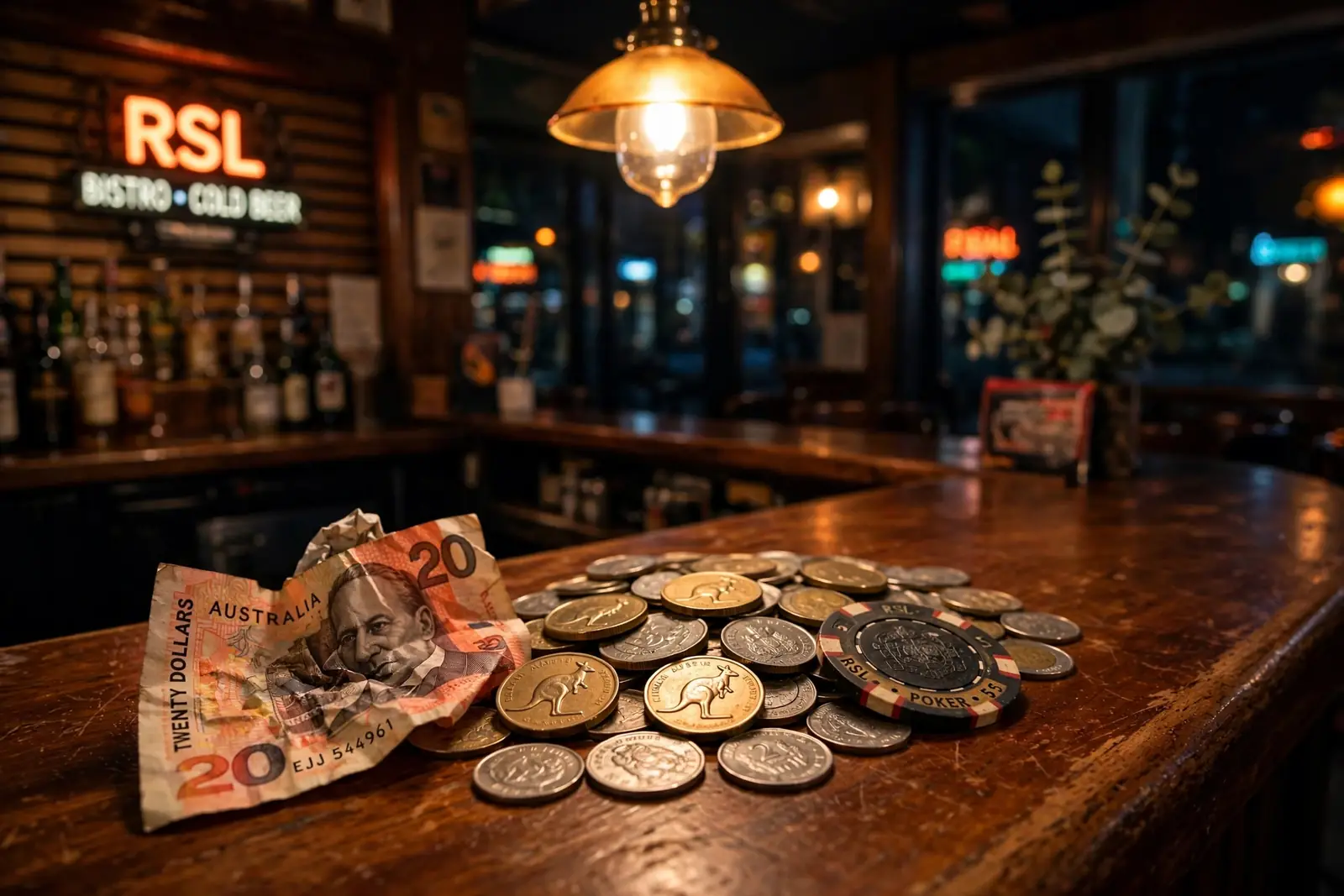
RTP stands for return to player. It is a theoretical percentage describing how much of the money wagered on a pokie is expected to be returned as prizes over a very large number of spins. It gives you a way to compare games on paper; it does not predict what will happen while you play.
The key phrase is “over a very large number of spins”. RTP is calculated across repeated play, not for one person’s visit or a short run of spins. Your result can be far above or below the theoretical return. I treat RTP as background information about a game, not as a session forecast.
A simple way to read the figure is as a long-run proportion: some of the total wagered is returned in prizes, while the remainder is not. That does not mean the game sets aside a personal share for you, or that it will balance your results after a losing run. The percentage describes the game’s theoretical behaviour across extensive play.
This is why RTP is useful for comparison but limited as a decision tool. It can help you understand a game’s stated return, but it cannot tell you whether your next spin will win, how often a prize will appear, or how much you might finish with. Those are different questions.
Each spin is generated independently by a Random Number Generator. In plain terms, the outcome of one spin does not make a win or loss on the next spin due. A streak may feel like a pattern, but it does not change the meaning of the RTP figure.
When you see a pokies RTP figure, read it as a long-run estimate rather than a promise attached to your session. That distinction matters. A percentage can look precise; your individual result remains uncertain.
A pokie’s title does not necessarily tell you which return setting is in use. Some providers give casinos a choice of RTP settings for the same game. A specialist review reports that this can leave one version configured with a different stated return from another version carrying the same name.
That distinction matters when you compare figures. You may see a familiar title described with one return percentage in one place and another percentage elsewhere. It does not automatically mean somebody has made a mistake, or that the game has been renamed. The casino may be using a different configuration of the same pokie.
Think of the title as the game’s identity, not a complete record of its setup. The artwork, theme and basic play can look unchanged while the selected RTP setting differs. If you compare only names, you can miss the detail that explains why the figures do not match.
It is tempting to treat a game name as a fixed package: same title, same mechanics, same return. But a provider may make more than one RTP setting available, and a casino can select among the settings offered for that game. So a familiar pokie can appear in different configurations across casinos.
That does not mean every pokie has several versions, or that every casino changes settings. The relevant point is narrower: where a provider offers a choice, the title alone cannot establish which setting is being used. A page that gives a game’s name and a return figure may still leave you unsure which configuration the figure describes.
I would keep those two details separate in my notes: the game title and the stated setting. It is a small habit, but it stops a common comparison from going sideways. Same name; potentially different setup.
Suppose two descriptions give different RTP figures for the same pokie. Before deciding that one is wrong, consider whether they refer to different settings. A difference between figures might reflect the configuration selected by each casino, rather than a change to the game’s theme or a new release.
The reverse is also true: matching titles do not prove matching settings. If two pages show the same number, that tells you the pages display the same figure; it does not establish that both games are configured identically. The number has to be connected to the specific version being described.
This is why lists of high-return pokies can be awkward to read. A title might appear with a particularly attractive figure, but that does not establish that every casino offering the title uses that setting. Nor does a figure attached to one listing necessarily describe the configuration elsewhere. The entry may be accurate for the version it refers to and still be a poor guide to another version with the same name.
There is no need to assume bad faith whenever figures differ. A provider’s available settings and a casino’s selection can account for a mismatch. But a bare title and percentage do not explain that relationship on their own.
When you encounter a return claim, look for wording that identifies the specific setting or version, not just the game title. If the description does not make the connection clear, treat the figure as a claim about the listing in front of you—not as a universal figure for that pokie.
That also changes how you read recommendations. “This pokie has a high return” can sound like a statement about the title in every context. More carefully, it may mean that one particular setting is listed with a high return. Those are different claims. The second is narrower and more useful, provided the setting is actually identified.
I would not compare two games by copying their titles into a table and sorting the percentages. First establish what each percentage refers to. Otherwise, you may be lining up one configuration against another without knowing it, then treating the result as a clean comparison. A tidy table can make a shaky comparison look precise. It cannot fix the missing detail.
For pokies with high RTP figures, the practical question is therefore not only “Which title is this?” It is also “Which setting does this figure describe?” That keeps the comparison attached to the version actually being discussed, rather than to every appearance of the same title.
A game’s available settings are part of the context behind its stated return. The title can stay the same while the selected setting changes, so a percentage should not be carried from one casino listing to another by assumption. Separate the name from the configuration, and the apparent contradiction often becomes easier to understand.
A return figure can look reassuring on a game page, but it does not tell you whether the service offering that game is lawful in Australia. The legal starting point is straightforward: under the Interactive Gambling Act 2001, companies cannot provide real-money online pokies to people in Australia unless they hold a domestic licence. No licences of this kind have been issued, so there is no Australian-licensed online casino.
That distinction matters when you come across a site describing its games as available to Australians. A foreign address, a polished website or a familiar pokie title does not amount to an Australian licence. Nor does a percentage shown beside a game change the legal position. The issue is not whether a game advertises a high return; it is whether an operator is permitted to provide real-money online casino games to people here.
The Act is directed at companies providing prohibited interactive gambling services, rather than at individual players. That means the legal risk described by this rule falls on the operator, not on an Australian for simply playing. It is still worth keeping the distinction precise: the fact that the player is not the target of the offence does not make an offshore operator locally licensed, or give its customers the protections that would come with a domestic regulatory system.
I would not treat “no player penalty” as shorthand for “nothing can go wrong”. It says something about who the law targets; it does not settle disputes with a business based overseas. If an offshore casino refuses to pay out, an Australian player has no legal recourse in Australia to compel payment. That is a practical difference, not a technical footnote.
The domestic picture is unusually clear. There is no local online casino licence that a real-money pokie site can point to, and none has been granted. So when a page uses language such as “licensed for Australian players”, check what it actually means. A licence from another country is not an Australian licence, and it does not turn the service into an Australian-regulated casino.
A return figure may be presented as if it were the main thing to compare, but it cannot answer the prior question: who is providing the game, and under what authority? An RTP label is not evidence of a domestic licence. It does not provide an Australian regulator to turn to if a dispute arises, either.
That is easy to miss when a page is built around familiar terms such as pokies, payouts and game settings. The presentation can feel local while the company behind the service is not licensed here. Keep those questions separate. A number describing a game and the legal status of the company offering it are different pieces of information.
The same applies to claims about fairness, payment methods or customer support. A service may describe its own arrangements, but those descriptions do not create an Australian licensing framework. And a payment option does not prove that an operator is authorised to provide online pokies to people in Australia. The wording on a site can be confident; the legal position remains the same.
You may see offshore sites say that Australians can register or play, or find pages that describe particular games as suitable for Australian players. Treat those claims as descriptions made by the service, not as proof of a local licence. The Act prohibits companies from supplying real-money online casino games to people located in Australia, and the absence of an Australian-licensed online casino is the key context.
At the same time, the law’s focus on operators should not be blurred into a claim that an individual player is prosecuted simply for playing. The two points can sit together: the operator is prohibited from supplying the service, while the player is not the target of that prohibition. Neither point guarantees that a customer can recover money from a company based offshore.
That last detail is the one people tend to discover too late. If a dispute turns on an unpaid win, account closure or withheld balance, an Australian player cannot rely on local legal recourse against an offshore casino. A game’s displayed RTP cannot change that position, however favourable the number looks.
So when you assess information about online pokies, begin by separating the game claim from the legal status of the service. There is no Australian-licensed online casino, and no domestic licence has been issued to offer real-money online pokies to residents. That is the context for interpreting any game description you encounter.
An RTP figure on a page about a pokie is only useful if you can connect it to the version of the game being offered. A general description may name the game and state a return, but that alone does not establish the setting attached to a particular copy. The missing link is the configuration.
A specialist review reports that some providers let casinos choose between multiple RTP settings for a given pokie. If that applies, the same title can carry different stated returns in different places. So a figure copied from a provider’s general game description, another casino’s page or an old review may not tell you what setting is in use where you are looking.
I’d treat the number as a claim to trace, not a fact to transfer from one page to another. Start with the game information available at the site displaying it. Does the figure appear alongside the exact game title, or is it attached to a broad catalogue entry? Is the setting identified, or is only a headline return shown? If the page does not make the connection clear, the figure remains unconfirmed for that version.
The same caution applies to search snippets and comparison pages. They may summarise a game without stating which setting their number refers to, or whether that number matches the version described. A repeated figure can look persuasive, but repetition does not show that every listing refers to the same configuration. Nor does a polished game page settle the point by itself.
You can ask the operator which RTP setting is configured for the specific pokie and whether it can point you to information that confirms the answer. Keep the question narrow: ask about the exact title and setting, rather than whether the game has a particular return in general. If the reply only repeats a broad promotional description, it has not resolved the uncertainty.
There is a useful distinction here. You may be able to verify that a page publishes a particular RTP claim; that is not the same as verifying that the displayed game is running on that setting. The first is visible on the page. The second requires a clear connection between the published figure and the configured game. If that connection is absent, don’t fill it in yourself.
This is a small detail with a big effect on comparisons. Two pages can name the same pokie and show different figures without either page making clear which setting it means. Until the setting is tied to the version being offered, putting those figures side by side can give a false sense of precision.
I wouldn’t treat a general game description as proof of a site-specific setting. Look for the figure attached to the exact game, check whether the setting is identified, and ask for clarification where it is not. If you still cannot establish the connection, the honest reading is simple: the page makes a claim, but you cannot confirm that it describes the configured version.
Verifying RTP Claims
Check the listing
Look for the figure attached to the exact game and see if the specific setting is identified.
Ask the operator
Request clarification on which RTP setting is configured for that specific title.
Evaluate the reply
Determine if the answer provides a confirmed match to the version or simply repeats a broad promotional description.
A table of pokies ranked by return percentage looks useful at first glance. The trouble is that a headline figure can make a comparison seem more settled than it is. A specialist review reports that some game providers let casinos choose between multiple RTP settings for the same pokie. So a percentage attached to a title may not describe every version of it.
That makes a simple ranking a shaky starting point. The game name alone does not tell you which setting is being discussed, and two entries labelled with the same title may not be comparable if they refer to different configurations. I would not treat a neat “best to worst” order as a dependable answer unless the figures clearly refer to like-for-like versions.
There is another practical snag: a shortlist can look precise while leaving out the detail that gives its numbers meaning. A bare percentage does not identify the configuration behind it. If that detail is absent, putting the title near the top of a table does not fix the gap; it only gives the uncertainty a tidy layout.
I’ve learned to pause when a list presents a single winning figure as if it settles the matter. The useful question is not just which pokie has the largest number beside its name, but what that number applies to. If the answer is unclear, the ranking cannot tell you whether another listed game is genuinely a better comparison.
For Australian readers, the phrase “highest RTP pokies” can also suggest there is a settled local catalogue to sort through. A headline or list does not establish that. It may simply repeat a figure associated with one version of a game, without showing whether that is the setting being referred to elsewhere. A ranking is only as informative as the distinctions it preserves.
That does not make RTP comparisons pointless. It means the comparison needs a narrower claim: these figures refer to the versions specified, rather than implying that a title carries one universal return setting. Without that qualification, a “highest” label can be more confident than the underlying comparison warrants.
When I’m looking at a claimed leader, I separate the title from the setting. If the setting is not made clear, I leave the game off any serious shortlist rather than filling in the blank myself. That is less exciting than a top-ten chart. It is also more honest.
You can still use a ranked list as a prompt for further checking, but not as proof that its first entry is the best choice. Treat it as a set of claims to compare, not a verdict. The number may be accurate for a particular configuration and still fail to describe the version someone has in mind.
A useful shortlist therefore avoids pretending that one headline percentage settles every comparison. It makes clear what is being compared and leaves room for the same title to appear differently under another setting. If those distinctions are missing, the ranking has not done the hard part. It has just sorted labels.
When you’re looking for the best RTP pokies in Australia in 2026, the RTP of the specific game is worth checking before you play. Use this list as a starting point and consider the available operator details as part of your decision.
Uptown Pokies
Uptown Pokies has operated since 2017 under a Curacao license. Its minimum deposit is A$20.
Neospin
Neospin is licensed by the Curacao Gaming Control Board under OGL/2023/176/0095, with Hollycorn N.V. named in the license details.
Playfina Casino
Playfina Casino has operated since 2017 under a Curacao eGaming license, with Hollycorn N.V. named in the details. Its minimum deposit is A$20–30, depending on the offer.
JustCasino
JustCasino is licensed by the Curacao Gaming Control Board.
SkyCrown
SkyCrown is licensed by the Tobique Gaming Commission and has a A$30 minimum deposit. Crypto payouts are listed at around 10–15 minutes, while fiat payouts take 1–5 days.
WinSpirit Casino
WinSpirit Casino is licensed under Curacao eGaming OGL/2024/923/0383, with Antillephone N.V. named in the details. Its minimum deposit is A$30.
Ricky Casino
Ricky Casino lists crypto payouts under 1 hour and PayID payouts in 1–3 business days. The minimum deposit is A$20, or A$30 to qualify for the bonus.
Wild Tokyo
Wild Tokyo has a Curacao license and a A$10 minimum deposit. Its listed payout times are 30–60 minutes for crypto and 1–5 days for fiat.
7Bit Casino
7Bit Casino is licensed in Curacao and operated by Dama N.V.
MrPacho
MrPacho lists crypto payouts at 30–120 minutes and fiat payouts at 24–72 hours. Its minimum deposit is A$30.
When people ask which pokie has the best payout, they may mean the one with the highest stated RTP. That can be a useful way to compare theoretical returns, but it does not tell you which game will pay you more during one visit. The figure describes a long-run expectation, not a forecast for your next few spins.
I used to read a bigger percentage as if it meant a better chance of leaving ahead that night. It doesn’t. A pokie’s result is generated spin by spin through a Random Number Generator, and each spin is separate from the one before it. A win on the previous turn does not make a loss due, and a run of losses does not make a win more likely next.
That is why “best payout” needs a little care. If you are comparing theoretical returns, RTP can help frame the comparison. If you mean “which one will give me the biggest result today?”, the percentage cannot answer that. A higher theoretical return does not promise a win, a particular prize, or even a better short session.
Short runs can be lopsided. You might finish ahead on a game with a lower stated return, or lose on one with a higher figure. Neither outcome proves the stated RTP wrong. It simply shows the gap between a long-run measure and the handful of outcomes you experience in a session. Paper is patient. Your balance is not.
So when you see a claim about the best payout, read it as a comparison of theoretical returns, not as a tip for a winning session. Don’t treat the figure as a prediction or a reason to chase losses. The next result is not influenced by what just happened, and no percentage can turn that independent event into a certainty.
If you are deciding what “best” means, separate the idea of a theoretical return from the result you want in the moment. They are not interchangeable. RTP can describe one feature of a game; it cannot tell you what your own session will look like. The distinction is plain, but easy to forget when a large figure is doing the talking.
When you come across a return figure for an Australian pokie, treat it as a clue about a particular version of the game, not automatic proof of the setting available wherever you see it mentioned. A specialist review reports that some providers let casinos choose between multiple RTP settings for the same pokie. So one game title can be associated with different return percentages at different casinos.
That distinction is easy to miss. A page may show a figure beside a game’s name without making clear whether it describes the provider’s version, a particular casino’s configuration or another setting altogether. The title alone does not settle that question. I look for wording that connects the percentage to the exact game version and the specific site being described. If that link is absent, the number may be informative, but it does not establish which setting is in use.
Pay attention to what the figure is attached to. Is it stated as the return for the game generally, or does the page identify the configuration offered by that casino? Those are not interchangeable claims. A description can be accurate about one available setting while saying nothing about whether that is the setting a given site has selected.
A game's title is its identity, but providers often offer multiple RTP settings for the same game, allowing casinos to choose which configuration to use.
It also helps to separate a game’s name from the details around it. Two pages can use the same name and display different figures without either number necessarily describing the configuration at the other site. The practical point is modest: compare like with like, and don’t carry a percentage from one listing over to another just because the pokie appears to be the same.
I used to read the biggest figure on a page as if it travelled with the game. It doesn’t. Unless the wording ties the number to the casino’s version, keep the claim attached to the page where you found it rather than treating it as a universal property of the title. That is a careful reading, not a verdict on which setting is offered.
For Australian readers, the useful question is therefore not simply “What RTP does this pokie have?” It is “What setting does this particular figure describe?” If the page does not make that clear, you have a percentage without a confirmed match to the version being discussed. Keep the distinction in view. A name is not a setting.
A high return figure attached to a pokie is only useful if it refers to the version actually configured at the site. The game’s title alone may not tell you that. A specialist review reports that some providers let casinos choose between multiple RTP settings for the same game, so a general description can point to a different return from the one in use.
That is the detail I would look for before treating a headline percentage as meaningful: does the information identify the setting, or does it simply describe the game in broad terms? If it names no configuration, you cannot tell from that claim alone whether it matches the version offered on the page you are reading.
The distinction is easy to miss. A game may be presented with a prominent return figure, while the fine print refers to a particular configuration or leaves the setting unclear. Those are not equivalent claims. The number may describe one available version without establishing that the same version is configured wherever the game appears.
Check the wording around the figure, not just the figure itself. Look for a clear link between the stated RTP and the specific game version. If the site provides no such detail, avoid filling the gap with an assumption based on the title, provider or a description elsewhere. A figure copied from another page does not, by itself, confirm the setting in use here.
I find it helpful to keep the question narrow: what exactly does this number describe? If the answer is only “this game” and the configuration is not identified, the claim is incomplete for comparing the return at that particular site. That does not prove the figure is wrong; it means you cannot confidently match it to the version being offered.
So, when you see a high online RTP claim, treat it as a starting point for checking the game’s configured return, not as a complete description. The fine print may be doing more work than the headline. Check the version first.
A pokie with a high RTP can look like the sensible pick on paper, but that figure cannot tell you what will happen on the spin you are about to make. It describes a game’s theoretical return across play, not a sequence of outcomes arranged to deliver that return neatly to each player. Your session does not get a special adjustment because the published percentage is high.
I keep one simple point in mind: the game’s Random Number Generator produces each spin independently. The result of the last spin does not make a win due, and a run of wins does not mean the next result must be a loss. There is no useful pattern to read into a short streak. It is just a streak.
That matters when you compare pokies with the highest RTP. A larger figure can help distinguish games in a long-run comparison, but it is not a forecast for your next few spins. Nor does it tell you whether a particular session will finish ahead. A high-RTP game can produce a losing session; a lower-RTP game can produce a winning one. Neither outcome proves the comparison wrong.
I’ve found it easy to treat a percentage like a kind of promise, especially when the number is presented confidently. It isn’t. The figure and the result in front of you answer different questions: one is a theoretical measure of return over extended play, the other is what the RNG has just generated. Mixing those up is where expectations get ahead of the game.
So if you choose a pokie partly because of its RTP, treat that as one comparison point, not a way to predict or control results. Set a limit before you start and stick to it; don’t raise it because a win feels close, or because a losing run seems overdue for a reversal. The next spin has no memory.
Useful distinction. Not a signal.
When I’m weighing an RTP figure, I treat it as a detail to confirm, not a verdict on a pokie. The number can help describe a game’s configured return, but it cannot tell you what a particular run of spins will do. Those are separate questions, and muddling them is an easy way to read too much into a headline.
A specialist review notes that some providers let casinos choose between different RTP settings for the same pokie. That means a figure attached to a game’s general description may not identify the version a particular casino has configured. If the number matters to your comparison, look for wording that ties it to the actual setting offered, rather than assuming every listing for that game refers to an identical return.
Then keep the figure in its lane. RTP is not a forecast for your next session, and it does not tell you when a win is due. A pokie uses a Random Number Generator to produce each spin, with each result separate from the one before it. A run of outcomes can therefore look nothing like the return percentage you saw beside the game. That is not the figure failing; it is a different timescale.
I’d also avoid treating a more precise-looking figure as automatically more useful. Precision in the display does not, by itself, establish which setting is in play or predict how a short session will go. The useful question is what the number describes. If that is unclear, the percentage alone cannot settle the comparison.
So, before relying on an RTP figure, check that it refers to the specific pokie setting being presented. Then remember what it cannot do: promise a result, smooth out a losing run, or make the next spin less random. That is a modest amount of information, but it is the honest amount.
A number can help you read the label. It cannot read the reels for you.
Yes, Australian players can legally play on offshore sites that accept them, but no Australian-licensed online casino exists. Offering real-money online pokies to Australians without a domestic licence is illegal for operators, and you have no legal recourse in Australia if an offshore casino refuses to pay.
You must be 18 or older to gamble online in Australia.
Check the wagering requirement and any cash-out cap before accepting a promotion. For example, a $500 bonus with a 40x requirement means $20,000 in bets before you can withdraw winnings; if the 35x requirement applies to a $500 deposit plus a $500 bonus, it means $35,000 in bets.
Yes, when a provider offers multiple RTP settings, a casino can select among them. Check that the stated RTP applies to the specific game setting at that casino, since the same title may have different returns elsewhere.
Prepared by the VegasNow Casino editorial staff.