We use cookies to enhance your experience, analyze traffic, and personalize ads. Please accept or manage your preferences.
From airport-area venues to the CBD, this guide covers practical checks on venue details, opening information and online pokies risks.
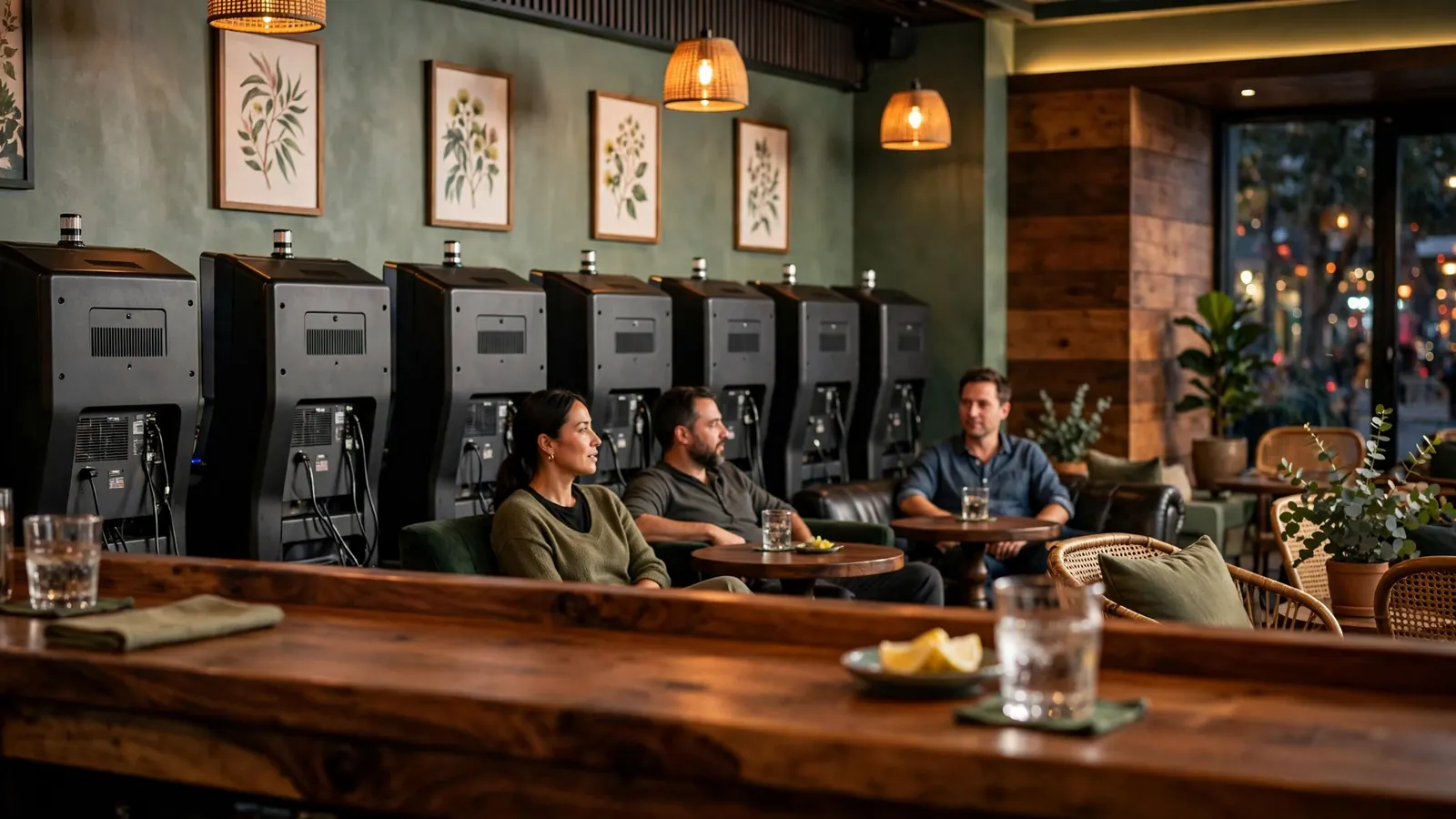
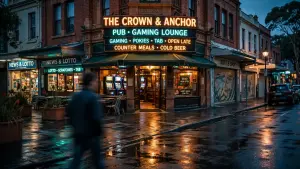
If you are looking for pokies near Melbourne Airport, the first useful check is whether the place you have in mind is actually a venue with pokies. A map result, an old directory entry or a photo with gaming-room signage is not the same as current confirmation. Before setting off, check the venue’s own information or contact it directly. That small step can save you a detour.
Be precise about the destination. “Near the airport” can mean different things depending on where you are starting and how you plan to travel. Put the full venue name and street address into your route planner, then make sure the address matches the venue’s own listing. If a map pin lands on a large complex or a road entrance rather than the public entrance, check the venue’s directions before leaving. It is an unglamorous bit of planning. Still useful.
When I am weighing up a trip, I look for details that answer practical questions rather than relying on a broad label such as “pokies near Melbourne Airport”. Confirm that the venue operates pokies, and check whether the information refers to the specific site you plan to visit. A group may have several locations, and details for one should not be assumed to apply to another.
If the venue’s website is unclear, call and ask directly. Keep the question simple: does this location have pokies, and is there anything a visitor should know before arriving? If the answer is vague, take a moment to clarify rather than filling in the gaps yourself. Online listings can be useful for finding a lead; they are less useful as a substitute for confirmation.
It is also worth checking what the venue says about entry and identification. In Australia, you must be at least 18 to gamble, including on pokies. If you are travelling with someone else, do not assume that everyone will be able to enter every part of a venue. Confirm any relevant entry conditions with the venue rather than guessing from a listing or a previous visit.
For a trip from the airport, think beyond the final destination. Check how you will get from your starting point to the venue, where the correct entrance is, and what your onward plan is after the visit. If you are arranging a lift or using public transport, make sure the directions lead to the venue itself, not simply to a nearby street or shopping area.
If you are collecting someone or travelling with luggage, check whether the venue’s directions and access arrangements suit that plan. Do not assume that a place close on a map will be straightforward to reach on foot or by car. Road layouts, entrances and drop-off points can make a short-looking trip less simple than it appears.
The same approach helps if you are looking around Melbourne Central, Port Melbourne or elsewhere near the city. A location name alone does not establish that a particular venue has pokies, or that it is convenient from where you are. Confirm the exact address and the venue details first. For a “near me” result, check that your map is using your current location and that the pin is for the venue you intend to visit.
I would keep the final check short and concrete:
If anything important is missing, contact the venue before you travel. Save its details so you are not relying on a search result when you are already on the way. If your plans change, check the destination again rather than assuming that a nearby alternative offers the same facilities.
These checks do not tell you whether a venue is the right choice for you. They do help prevent a common mistake: treating a place name, map pin or old listing as confirmation of what is there today. For airport-area pokies, get the venue and address straight first. Then decide whether the trip works.
A venue showing as open does not necessarily tell you whether its pokies are operating, or whether the information is current. Before setting out, check the venue’s own website or contact it directly. Look for the hours that apply to the day you plan to visit, and confirm any details that matter to your trip rather than relying on an old listing or a search result preview.
That extra check is worth the small effort. A listing can be out of date, and “open” may refer to the venue generally rather than the availability of its gaming area. If you are travelling early or late, be especially clear about what you are asking: whether the venue is open at that time, and whether pokies are operating. No guesswork required.
The useful question is not only whether a venue is open, but what boundaries you want in place if you go. Deposit limits, loss limits and session time limits are standard responsible-gambling tools. Self-exclusion is another option. These tools do different jobs: some set a financial boundary, while others limit how long you spend playing or prevent access.
Check directly with the venue to find out which tools it offers and how they work. Do not assume that every venue sets them up in the same way, or that a limit will take effect immediately. If you want one in place before you play, ask how to arrange it and when it applies. Get the practical details first.
I would set a stopping point before walking through the door, not once I am already there. Choose an amount you can afford to lose, and a time to leave. A limit only helps if you stick to it; changing it in the moment because you are down or on a run defeats the point. The machine does not know your plan. It will keep taking spins.
If you find that it is hard to stop, self-exclusion may be more appropriate than relying on a personal reminder. Ask the venue about the process and what access it covers. You do not need to wait until things feel severe to ask about support or put a boundary in place.
A report published by regionriverina.com.au says that, from 1 July, venues operating more than 20 gaming machines are required to have a dedicated responsible gambling officer (RGO) present while those machines are running. If you want to speak with someone about gambling concerns or available safeguards, ask venue staff how to contact the RGO.
That requirement is tied to the size of a venue’s gaming-machine operation; it does not establish that every venue has an RGO on duty. If you are unsure who to approach, ask a staff member. You can also ask before playing how to set a limit or arrange self-exclusion. Better to know the route than to try to work it out when you are stressed.
Keep the check simple:
There is no need to turn a quick outing into a research project. But checking the details and choosing your limits beforehand gives you a clearer decision than an “open now” label alone. If the venue cannot answer a basic question about its hours or safeguards, you can pause and decide whether the trip still makes sense.
Choosing pokies to play in Melbourne means looking beyond the games to practical details such as licensing, deposit requirements and payout options. Use this list as a starting point, and check the terms that matter to you before signing up.
Uptown Pokies
Uptown Pokies has operated since 2017 and holds a Curacao licence. You can start with a minimum deposit of A$20.
Neospin
Neospin operates under a Curacao Gaming Control Board licence, reference OGL/2023/176/0095, held by Hollycorn N.V. This gives you a specific licensing detail to consider.
Playfina Casino
Playfina Casino is licensed by Curacao eGaming and operated by Hollycorn N.V., with a stated operating history dating back to 2017. Its minimum deposit is A$20–30, depending on the offer.
JustCasino
JustCasino holds a Curacao Gaming Control Board licence. You can use that licensing information as one point of reference when considering the casino.
SkyCrown
SkyCrown is licensed by the Tobique Gaming Commission and has a minimum deposit of A$30. Its stated payout times are around 10–15 minutes for crypto and 1–5 days for fiat.
WinSpirit Casino
WinSpirit Casino holds a Curacao eGaming licence, reference OGL/2024/923/0383, issued to Antillephone N.V. The minimum deposit is A$30.
Ricky Casino
Ricky Casino lists crypto payouts in under an hour and PayID payouts in 1–3 business days. The minimum deposit is A$20, or A$30 to qualify for the bonus.
Wild Tokyo
Wild Tokyo has a Curacao licence and a minimum deposit of A$10. Stated payout times are 30–60 minutes for crypto and 1–5 days for fiat.
7Bit Casino
7Bit Casino is licensed in Curacao and operated by Dama N.V. These operator and licensing details are the available points of reference for you.
MrPacho
MrPacho lists payout times of 30–120 minutes for crypto and 24–72 hours for fiat. Its minimum deposit is A$30.
A “best paying” label sounds like a simple promise: choose the pokie with the highest return and expect a better result. That is not what a published return tells you. It describes a theoretical rate across play, not what you will collect from a particular visit, session or spin. A high figure is not a forecast for your next result.
Each spin is generated independently, so the outcome of one does not set up or improve the next. A run of losses does not mean a win is due, and a recent win does not make another more likely. That can be easy to forget when you are watching a machine closely. The numbers do not remember your last spin.
There is another catch: the return setting may not be identical everywhere. A specialist review reports that some game providers let casinos choose among multiple RTP settings for the same pokie. So a published percentage attached to a game name may not tell you the setting used at a particular venue. If the setting is not clearly stated for that venue, a figure found elsewhere is not enough to establish it.
That matters when you compare Melbourne pokies. A game’s name, theme or familiar appearance does not prove that its return setting matches the one described in a review or elsewhere. Nor does a high published return guarantee that a venue’s version will produce a particular result for you. Treat any figure as information about a theoretical setting, not a personal prediction.
If the setting is clearly identified, the published return can help you understand the game’s stated theoretical return over extensive play. It can be one point of comparison, but only when you know what version or setting the figure refers to. A number without that context can look more decisive than it is.
It also cannot tell you how your own play will end. The independent nature of spins means that short-term results can differ from a long-run theoretical rate. You might leave ahead, lose what you brought, or see a result that seems at odds with the published figure. None of those outcomes, by itself, proves that the figure predicts what should happen next.
When people ask for the best-paying pokies in Melbourne, I would first separate two questions: what return setting is actually in use, and what does that figure mean? If you cannot establish the setting, ranking games by numbers gathered from different places is shaky. If you can establish it, the figure still does not tell you what you will win.
So, before treating a return claim as a reason to choose a pokie, check whether it applies to the version at that venue and remember that it is not a promise about your session. That is less exciting than a shortlist of winners. It is also the honest reading.
When you’re comparing Melbourne venues, “best” is a slippery label. A room can look polished and still tell you little about how it handles a patron who appears to be experiencing gambling harm. Venue safeguards are less glamorous than a winning story, but they’re more useful to understand before you sit down.
A reported change to venue rules requires a dedicated responsible gambling officer (RGO) to be present while gaming machines are operating at venues with more than 20 machines. The report says venues were given a one-month grace period to put the officers in place and remove relevant signage. That makes the RGO a specific on-duty role, not just a name on a poster.
 Best pokies in Geelong: What to check before you goFind out why venue opening hours may not confirm that gaming facilities are operating, and what to verify directly before travelling.
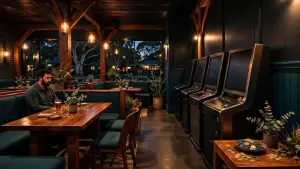 Best pokies in South Australia: what to checkCompare what “best pokies” can mean in South Australia, and see why each spin is independent and RTP is not a personal…
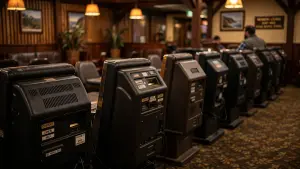
There are also strict rules about where gambling-related signs can appear. Signs directing patrons to gaming lounges must not be in the sightline of ATMs or EFTPOS terminals. Signs pointing people towards ATMs must not be visible from gaming machines. A quick look around the room can therefore tell you something concrete about whether the venue is paying attention to its obligations. A sign is not a safeguard by itself.
The other practical change is the gambling incident register. Venues are required to record occurrences in which a patron’s behaviour indicates that they may be at risk of gambling harm or already affected by it. In other words, the register is about recording a concern when it arises, rather than merely displaying general information about responsible gambling.
That gives you a sensible way to think about venue reporting without guessing at machine numbers or outcomes. The existence of a register does not tell you how many incidents a venue has recorded, and a blank-looking public area does not tell you what is in an internal record. It does establish that venues are expected to document relevant occurrences, rather than treat them as conversations that disappear once they end.
If you want to ask staff about these arrangements, keep it simple: ask whether an RGO is on duty when the machines are operating, and how the venue handles a concern about gambling harm. You do not need to ask about another patron or seek private details. The answer should help you understand the process, not reveal someone else’s information.
Signs directing patrons to gaming lounges must not be in the sightline of ATMs or EFTPOS terminals, and signs pointing to ATMs must not be visible from gaming machines.
I’d also pay attention to whether the signs around machines and payment points follow the placement rules. That is a more grounded check than judging a venue by its décor or by claims that it is the best pokies venue in Melbourne. No single sign, staff member or register can tell you how every situation will be handled. Still, these are observable responsibilities, not promises about a particular result.
Records matter because they make a concern part of the venue’s formal handling, rather than leaving it entirely to memory. For you, the useful distinction is between a venue that can explain its safeguards and one that relies on vague reassurance. Keep the question practical, respect other patrons’ privacy, and don’t mistake a compliance measure for a guarantee that gambling harm cannot occur. Dry, but important.
If you are considering Crown Melbourne for pokies, separate the venue name from the details you need for a particular visit. A search result or an old directory entry may identify Crown, but that alone does not tell you which gaming areas are available, what machines are there, or whether the information is current.
I’d check Crown’s own current venue information before making plans. Look for details that answer your specific question, and note whether they apply to the whole venue or only to a particular area. If a page gives no date or leaves the scope unclear, treat it as a starting point rather than a firm answer. A precise claim needs a precise source.
 Pokies in Brisbane: Hours, Locations and ChecksLearn why venue opening times may not match gaming-room hours, what to verify directly, and how to assess Brisbane locations and online…
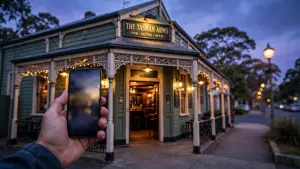 Best Pokies in Tasmania: Venue Hours and Local SearchesLearn how to check whether a Tasmanian venue’s gaming area is open, assess map listings, and distinguish local venue searches from online…
The same goes for descriptions of a “best pokies room”. Best can mean different things: the machines available, the layout, access arrangements or the general atmosphere. Those are not interchangeable, and a broad label does not establish that a particular room has what you want. Decide what matters to you, then look for information that addresses that point directly.
Be cautious with third-party listings that combine venue descriptions with machine names or performance claims. Unless a claim is clearly tied to Crown Melbourne and supported by current, venue-specific information, it should not be treated as a confirmed detail about the venue. A list copied across several pages is still just a list.
If you contact the venue, ask a specific question rather than relying on a general description. For example, you can ask whether the area you have in mind is accessible and whether the information you found applies to your planned visit. Keep the answer in context: details about one area or occasion may not describe the venue as a whole.
There is a useful distinction here. Crown Melbourne is the venue you are asking about; the exact pokies, room details and performance claims are separate questions. I would not turn a venue name into a machine recommendation, or treat a room label as proof that it is the right choice for you.
Check the detail, not just the name.
Looking for online pokies from Melbourne is different from checking a local venue. Under the Interactive Gambling Act 2001, companies must not provide real-money online casino games, including pokies, to people in Australia. No Australian online casino licences have been issued, so there is no locally licensed online casino to choose.
That distinction matters if a site appears to accept Australian customers. The law targets the operator, not the individual player, but that does not make an offshore site a protected place to gamble. If it withholds your winnings, you have no legal recourse in Australia against it. A page loading on your phone is not proof that the service is lawful or that you can recover your money.
The Australian Communications and Media Authority (ACMA) enforces the Act and blocks access to illegal offshore gambling sites. Internet service providers must comply with its blocklist. A site being reachable at one moment does not establish that it is authorised, reliable or likely to remain accessible. I would not treat a Melbourne address, Australian currency display or local-sounding branding as evidence of protection.
Payment can create a separate false sense of security. PayID is an alias system built on the New Payments Platform: it lets people send transfers using an email address, mobile number or ABN. That describes how a transfer is addressed. It says nothing about whether a gambling operator is licensed, whether its games are fair, or whether a withdrawal will be paid. Cashless payment is not a safety check.
Before entering payment details anywhere, pause over what the transaction actually means and what recourse you would have if something goes wrong. A familiar payment label cannot supply the legal protections that an Australian licence would provide. There is no such online casino licence in Australia. That is the part people skip.
If your aim is to find the best-paying pokies in Melbourne, an online result cannot settle that question safely. A payment method does not certify a game’s return, and a site’s claim is not a guarantee of any result. Keep online claims separate from information about physical venues; they are not interchangeable.
BetStop is also not a workaround or a universal shield: it applies to Australian-licensed operators and does not bind offshore sites. Since Australia has no licensed online casino, do not assume registering with BetStop would block access to, or control activity on, an offshore casino site.
For me, the practical line is simple: treat real-money online pokies as an unprotected choice, not as a cashless version of a local venue. If a service presents PayID as proof of legitimacy, that is a payment feature being asked to do a job it cannot do. Payment convenience is not licensing.
A late-night plan needs one detail settled before you leave: whether the venue is actually open when you expect to arrive. A venue having pokies does not, by itself, tell you its opening hours. Nor does a broad claim that a place is open around the clock prove that the gaming area is available at every hour.
I’d check the venue’s own current information, not rely on a copied listing or an old mention in a directory. Look for hours that apply to the venue itself, and read any notes about gaming areas or late-night access. If the details are unclear, contact the venue directly before making the trip. It is a small check, but it beats arriving to find your plan depends on an assumption.
Pay attention to the date and wording of any hours you find. A search result can show a summary without making clear when it was updated or what part of the premises it covers. “Open” may not answer the question you actually have: whether you can use the pokies at the time you plan to be there. Check that the information refers to the right venue and the right service.
For a visit late at night, confirm the hours close to departure rather than treating something you read earlier as settled. If you are travelling with someone else, share the confirmed details so you are not both working from different assumptions. Keep a fallback plan that does not depend on finding another venue open nearby.
I would not describe any Melbourne venue as a 24-hour option without clear, current confirmation of its hours. The same goes for claims about late-night access: check the venue’s own details rather than infer them from the fact it offers pokies. “Open now” is only useful when it matches the time you will arrive and the area you intend to use.
There is no clever shortcut here. Confirm first. Then go.
Melbourne’s east, south-east and west cover a lot of ground. If you are choosing a venue in one of those directions, check the exact address and confirm that it has the facilities you are looking for before setting out. A suburb name alone is not enough to tell you what is available at a particular venue.
I would start with the venue’s own current information, then contact it if anything important is unclear. Make sure the address matches the place you intend to visit; similar names or broad area labels can send you to the wrong end of town. Confirm that pokies are available there rather than assuming that every club or hotel in the area has them.
The same care applies around St Kilda. It is a specific destination, not a guarantee about what any individual venue offers. Check the venue itself, not just a map result or a short directory listing. That small extra step can save a wasted trip.
“Best” also needs a bit of unpacking. A search for a good venue in the eastern suburbs, the south-east or the western suburbs cannot tell you which place will suit you. Think about what matters for your visit, then verify those details directly. I wouldn’t treat a broad label as a recommendation.
If you are comparing maximum bets, check the rules for the particular pokie and venue. Don’t infer a maximum from a game’s name, a photo or a general description. A maximum bet is a setting, not a measure of how likely a game is to pay out. Every spin remains an independent random event.
One result people sometimes see is a reference to Newcastle alongside Melbourne. Those are different places, so read the location carefully before making plans. A result that combines both names is no substitute for confirming the actual address.
Before you go, keep the plan simple: identify the venue, check its address, and confirm the specific facilities or game settings you care about. If you cannot establish those details, choose another way to spend the trip. No guesswork needed.
CBD searches can make it tempting to compare venues by reputation or by what someone says is on the floor. I’d start with a more practical question: what safeguards apply while the pokies are operating, and who is there to help if gambling stops feeling manageable?
A report published by regionriverina.com.au says that, from 1 July, a venue operating more than 20 gaming machines is required to have a dedicated responsible gambling officer (RGO) on duty while those machines are running. That is a venue-level requirement tied to the machine threshold; it does not tell you which Melbourne CBD venues meet it. Nor does a search result or a venue’s name establish how many machines it operates.
If you are checking a club or other venue, ask staff whether an RGO is on duty when the machines are operating and how to contact them. Keep the question specific. A clear answer is more useful than a general claim about being responsible.
An RGO is not a promise that gambling will be harmless, and the rule does not change the basic odds of a pokie. It does give you a point of contact at a venue covered by the requirement. If you want to step away, ask what support and self-exclusion options are available. Deposit limits, loss limits and session time limits are also recognised responsible-gambling tools, though you should confirm what the venue can put in place.
I’d avoid treating “best” as a safety measure. A venue may suit your plans, but the word itself says nothing about safeguards, machine settings or likely results. Check the practical detail before you settle in.
One small but useful distinction: the RGO requirement described in the report applies while machines are operating, not simply whenever a venue is open. If the answer about the officer or the venue’s procedure is unclear, you can choose not to play. No need to negotiate with a pokie.
If you’re looking for pokies in North Melbourne or South Melbourne, check the specific venue before setting off. A suburb name alone doesn’t tell you whether a particular venue has pokies, and details can change. I’d confirm the venue’s own information rather than rely on an old listing or assume a nearby hotel has a gaming area.
Keep the check narrow: make sure the address is in the area you mean, and confirm that pokies are available at that venue. If the listing is unclear, contact the venue directly. That small step can save a wasted trip.
Once you arrive, decide what you’re comfortable spending and how long you intend to stay before playing. Deposit limits, loss limits and session time limits can help you stick to that plan; self-exclusion is another option if you need a break from gambling. Each spin is independent, so a run of results does not tell you what the next one will be.
I wouldn’t treat either area as a shortcut to a “best” venue. Without reliable details about a venue’s machines or conditions, a confident ranking would be noise dressed up as advice. Check the place, make your own plan, and leave if gambling stops being enjoyable.
Yes, Australian players can legally play on offshore sites that accept them, but offering real-money online pokies to Australians without a domestic licence is illegal. No Australian online casino licences have been issued, and you have no legal recourse in Australia if an offshore casino refuses to pay.
Each spin is an independent random event determined by a Random Number Generator. However, some game providers let casinos choose from different RTP settings for the same pokie, so its return percentage can vary between casinos.
Yes, PayID is treated like any other qualifying deposit method at the recommended sites.
Created by the ”VegasNow Casino” editorial team.