We use cookies to enhance your experience, analyze traffic, and personalize ads. Please accept or manage your preferences.
Hotel rooms, venue services and online access are different questions, and search phrases alone do not confirm what a Melbourne property or gaming site offers.
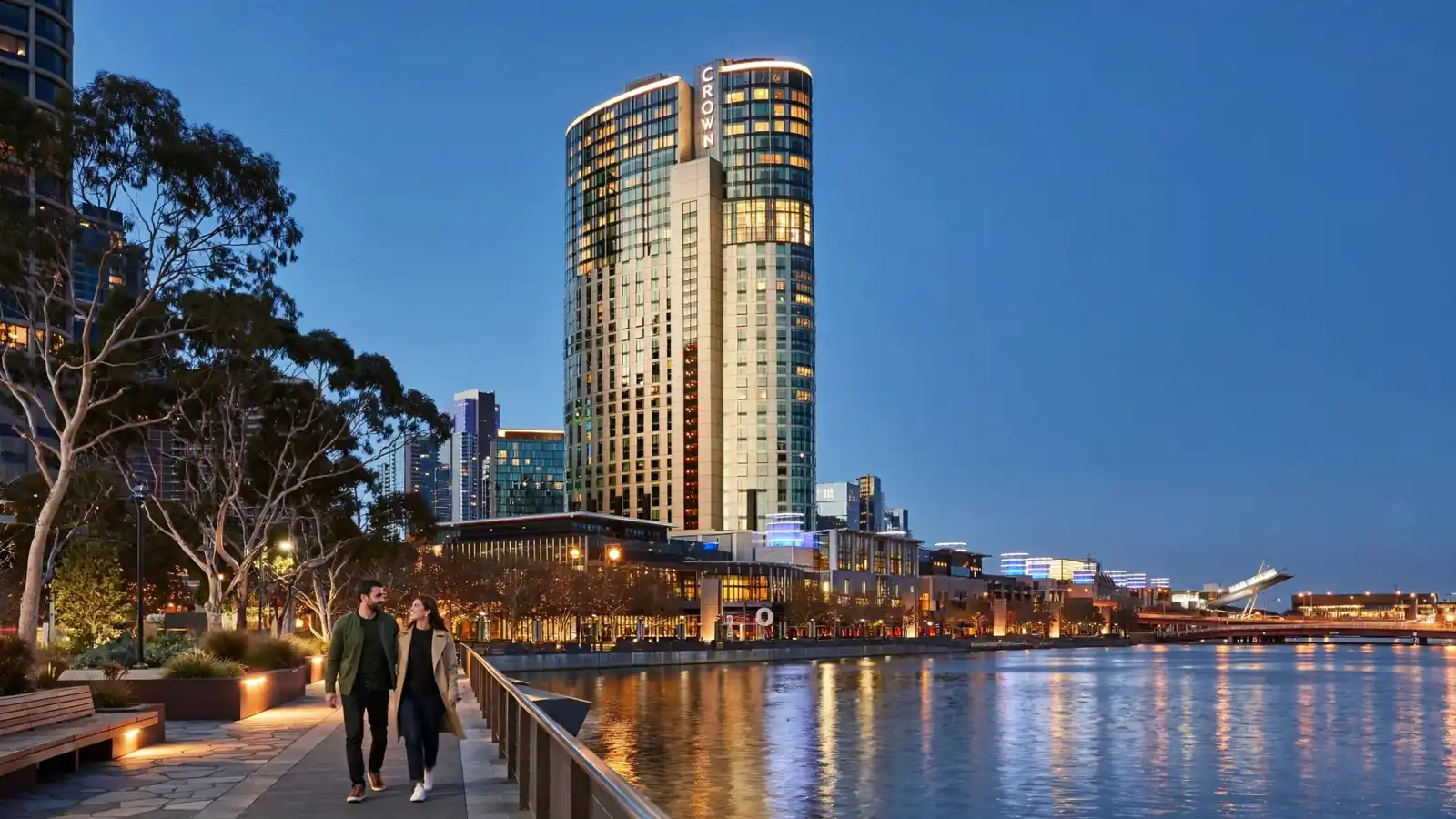
A casino hotel can mean a place to stay that is attached to, or close to, a physical casino. That is a different thing from an online casino, even though both use the word “casino”. If you are weighing a Melbourne stay, keep those meanings apart before assuming that a hotel room, a casino floor and online games are all part of one package.
Phrases such as “hotel near the casino” point to accommodation and location. “Casino hotel rooms” or “hotel deals” suggest questions about room types, prices and what a stay includes. Those are practical venue questions, and the wording alone cannot tell you what a particular Melbourne property offers. I would not treat a familiar-sounding phrase as proof that a room is attached to the casino, that a deal is available, or that any particular service comes with a booking.
Opening hours are another venue detail, not a clue about online gambling. A casino’s physical operating times and the availability of a game on a website are separate matters. One concerns a real place and its schedule; the other concerns whether an online service can lawfully be offered to someone in Australia. A name or hotel listing does not settle that legal question.
If you’re looking for an online casino to consider from Melbourne in 2026, the details below give you a quick reference to each option. Use the listed licensing and payment information to help decide what you want to check further.
Uptown Pokies
Uptown Pokies has operated since 2017 under a Curacao license. You can start with a minimum deposit of A$20.
Neospin
Neospin lists a Curacao Gaming Control Board license, OGL/2023/176/0095, held by Hollycorn N.V. You can use that licensing detail as a reference when considering the casino.
Playfina Casino
Playfina Casino operates under a Curacao eGaming license held by Hollycorn N.V. and has done so since 2017. Its minimum deposit is A$20–30, depending on the offer.
JustCasino
JustCasino is listed with a Curacao Gaming Control Board license. You can check that licensing detail as part of your research.
SkyCrown
SkyCrown is licensed by the Tobique Gaming Commission and has a minimum deposit of A$30. Its stated payout times are around 10–15 minutes for crypto and 1–5 days for fiat.
WinSpirit Casino
WinSpirit Casino lists a Curacao eGaming license, OGL/2024/923/0383, held by Antillephone N.V. Its minimum deposit is A$30.
Ricky Casino
Ricky Casino lists crypto payouts in under an hour and PayID payouts in 1–3 business days. The minimum deposit is A$20, or A$30 to qualify for the bonus.
Wild Tokyo
Wild Tokyo is listed with a Curacao license and a minimum deposit of A$10. Its stated payout times are 30–60 minutes for crypto and 1–5 days for fiat.
7Bit Casino
7Bit Casino is listed with a Curacao license and is operated by Dama N.V. You can use those details as a starting point for further research.
MrPacho
MrPacho lists payout times of 30–120 minutes for crypto and 24–72 hours for fiat. Its minimum deposit is A$30.
For online casino games, the key distinction is not whether you are staying in a hotel. It is where the operator is based and who it is providing the service to. Under the Interactive Gambling Act, an operator based in Australia cannot offer online casino games to people in Australia. That restriction covers games such as pokies, blackjack and roulette.
So an Australian hotel casino and an online casino are not interchangeable options. A physical venue may be the subject of accommodation or opening-hours enquiries; that does not make online casino games lawful for an Australian-based operator to provide to local players. The setting does not change the rule. Sitting in a hotel room, rather than at home, does not turn a prohibited online service into a permitted one.
This is the point that is easiest to miss when the same word appears in both contexts. A page about a hotel stay can lead you to details about a physical venue. It does not establish that the venue offers online play, nor does it answer whether an online casino service may be provided in Australia. Keep the two questions separate.
If you mean a place to sleep, focus on accommodation information tied to the specific property: whether it is on-site or nearby, what rooms are offered, and what a quoted rate includes. If you mean casino games online, focus instead on the legal distinction above. Neither subject should be inferred from the other.
I’d also avoid reading a phrase like “casino hotel” as a promise of a particular arrangement. It could describe a hotel associated with a casino, or simply accommodation someone hopes to find near one. Without confirmed property information, it is not enough to establish room availability, a special rate, or venue hours. Those are details to verify with the venue itself.
The useful takeaway is simple: accommodation and online gambling may share a label, but they do not share the same rules or answer the same question. For a Melbourne stay, check the physical property details. For online pokies or table games, remember that Australian-based operators cannot offer them to people in Australia under the Interactive Gambling Act. Different meanings. Different rules.
A poker room and a poker-machine area are not the same thing. If you are looking for live poker at a Melbourne casino, a tournament calendar or details about cash games, those are venue-specific questions. The NSW rules about poker machines do not answer them, and they should not be used as a shortcut for describing a Melbourne poker room.
That distinction matters because “poker” can point to different activities. A poker tournament involves players competing against one another under the event’s rules; poker machines, often called Electronic Gaming Machines (EGMs), are gambling machines. A legal age or pre-commitment rule for machines does not establish which poker events a venue runs, whether registration is open, or what format a tournament uses. Those details need confirmation from the venue itself.
The state boundary is the easy part to miss. In NSW, the legal age for gambling on poker machines is 18. NSW also requires players to set a loss limit through a pre-commitment system before playing. Those are NSW-specific points about poker-machine gambling. They do not tell you the age conditions for a Melbourne poker tournament, how a Melbourne venue handles entry, or whether an event is running today.
I would keep the same care with searches about a casino sports bar or whether a casino is open today. A sports bar is not a poker room, and a venue’s opening status is not a tournament schedule. A general label or an old event listing can leave you with the wrong impression; for current hours, events and entry conditions, check the venue’s own current information before setting out. No guesswork needed.
If you are going to gamble on poker machines at a venue, expect identification to be checked. A person who is under the applicable legal age cannot gamble on them, and failing to meet venue requirements can have legal consequences. In NSW, the age threshold is 18, and the pre-commitment process requires a loss limit to be set before play. Those protections are not a description of tournament rules, and they should not be presented as if they were.
For a Melbourne poker-room visit, the practical questions are narrower: is the room operating, is there a tournament on, and what conditions apply to taking part? The NSW machine rules cannot fill in those answers. Nor does a result mentioning casino rooms necessarily refer to poker; it may concern accommodation, which is a separate question.
I would not treat “poker at a Melbourne casino” as one settled offering without checking what the venue currently lists. A room may have its own schedule and entry conditions, while a poker-machine area follows a different set of rules. The wording can look similar. The details are not interchangeable.
So keep the NSW facts in their lane: 18 is the poker-machine gambling age there, and players set a loss limit before playing under the state’s pre-commitment system. They are useful context for NSW, not proof of what a Melbourne casino offers, when its poker room operates, or whether it has a tournament or sports bar open today.
A search for a casino in Melbourne can mix up two practical questions: how to get to a physical venue, and whether casino games can be reached online from Australia. They sound related because they share a place name, but one does not answer the other. A mention of online games tells you nothing about parking, valet service or whether parking is free.
I’d keep those decisions separate. For parking arrangements, look for current information from the venue itself; an online casino page is not a reliable guide to its car park. Likewise, a page about a venue’s location cannot tell you whether a particular online game will load on your device. Different question, different source.
The online side can be affected by where you are connecting from. An online casino may use your IP address to estimate your geographic location, then restrict access based on the country associated with it. It can also block IP addresses linked to countries it excludes. So a game may be unavailable even if the website opens and its lobby is visible.
That can make “online casino” results confusing. A site may appear in a browser, but that does not mean every game or provider on it is accessible from Australia. Restrictions may apply to particular games or software providers, rather than making the whole site disappear. Your physical location matters to the access decision; searching for Melbourne does not override it.
This distinction is useful when you are weighing a visit against an online option. A local venue is a place you travel to, with its own practical details to check. An online platform is a service whose access can be limited by geographic rules. The word “Melbourne” in a page title does not prove that the service is based here, that its games are available here, or that it has any connection to a local car park.
There is also a legal boundary behind the online question. Under the Interactive Gambling Act 2001, operators based in Australia cannot provide real-money online casino games such as pokies, blackjack or roulette to people in Australia. That is about the operator and the service, not a claim about a Melbourne venue’s facilities. A local address in a web page would not change the rule.
When a game is blocked, changing the wording of a search or returning through a different page will not necessarily make it accessible. The restriction can be applied to the connection’s apparent location. I would not treat a game listing as confirmation that the game is playable from Australia, and I would not treat a result about online access as information about venue parking.
Keep the two checks apart: use venue information for getting there, and understand that online access may depend on location-based restrictions. The shared city name is just a label. It is not a parking sign, and it is not proof that an online game is available.
A casino accommodation offer can sound like one simple package: a room, access to the venue and perhaps a special rate. But the phrase alone does not tell you what is actually included. A room might be part of a hotel booking, an accommodation deal might have conditions, and a nearby stay might have no connection to the casino at all. Treat those as different arrangements rather than assuming they are interchangeable.
I wouldn’t read a general reference to Melbourne casino accommodation as confirmation of a particular room, price, location or promotion. The same goes for claims about parking or opening hours: those are separate details, not something you can safely infer from the word “accommodation”. Before making plans, look for the specific property and the terms attached to the booking. If those details are not clear, don’t build an itinerary around them.
That distinction matters most when you are deciding whether a stay is genuinely convenient. “Near” can mean different things in practice, and a deal can sound attractive while leaving out the details you need to compare it with another hotel. Check what the booking actually covers, where the property is, and whether the dates suit your plans. A headline is not the fine print.
There is another possible meaning behind casino-related searches: online games accessed while you are in Australia. That is separate from booking a room in Melbourne. An online casino or its software provider may block games for Australian players when the rules of the jurisdiction where it is licensed require that restriction. So a game being unavailable does not tell you anything about a hotel’s location, room availability or accommodation terms.
The reverse is true as well. Finding a place to stay does not establish that online casino games will be accessible from your Australian location. Venue arrangements and online access are separate questions, with different conditions behind them. Keep them apart when comparing options.
If you are planning an overnight visit, confirm the accommodation details with the property rather than relying on a broad description. Make sure you understand what the price includes and whether the booking is for the place you intend to stay. For online play, access may depend on restrictions set by the casino or game provider under its licensing jurisdiction; a hotel booking does not change those conditions.
That is the practical line: a casino-themed accommodation phrase is not proof of a room deal, and a room deal is not a promise about online games. Check the stay on its own terms. Keep the two separate.
A phone number can help you reach a venue, but it cannot tell you whether an online gambling platform is regulated in Australia. Those are separate questions, even when both are described as “casino” information.
If you need to ask about a Melbourne venue’s bar, car park, map, concerts or table games such as baccarat and craps, use contact details published by the venue itself and check that they relate to the place you mean. A number copied into a directory or an old page may not be current. I wouldn’t treat it as confirmation of opening arrangements, facilities or services; it is simply a way to ask the venue directly.
The same distinction matters when you come across an online casino. A contact page, Australian-sounding phone number or quick reply from customer support does not establish that the platform is regulated under Australian law. Nor does a polished site settle the question. Contactability and legal status are not the same thing.
For Australian players, offshore platforms sit in a legal grey area. It is technically not illegal for a player in Australia to use one, but that does not make the platform regulated under Australian law. In other words, the operator’s location or licensing arrangements do not turn it into an Australian-regulated service. That is the point to keep in view before treating a support contact as a sign of local oversight.
There is a practical difference between asking a venue where to find its car park and asking an offshore operator to resolve an account problem. The first is a venue-information question. The second involves a platform that is not regulated under Australian law, so you should not assume Australian regulatory protections apply just because support staff respond. A friendly answer is not a licence.
I’d keep the details separate on paper, too: one contact route for the physical venue, another for an online account, if you already have one. Don’t send personal or payment information to a number or address just because it appears beside a casino name. First confirm that the contact belongs to the organisation you intend to reach.
That also stops a common mix-up: a Melbourne casino’s contact details cannot verify the standing of an unrelated offshore website, and an online platform’s help desk cannot confirm venue facilities. If your concern is whether an online casino is regulated here, focus on its legal status—not its response time, branding or claims of local familiarity. A working phone line proves only that someone can answer it.
A breakfast or buffet listing is a specific claim about a venue, not something you can infer from the word “casino”. The same goes for calling a Melbourne property a resort, describing its rewards programme, or saying it is hiring. I wouldn’t treat those details as established without current venue information. A familiar name or an old listing is not enough.
That matters if you’re comparing places before making plans. A page that mentions a casino may not tell you whether breakfast is served, whether there is a buffet, or what dining options are available. “Resort” can also suggest a bundle of facilities, but the label alone does not confirm what is on site. Check the venue’s own current information for the detail you need; if it does not clearly answer the question, don’t fill in the gaps by assumption.
Rewards need the same care. The term might refer to a particular membership scheme, but it does not tell you what joining involves, what benefits apply, or whether any offer is current. I’d look for the actual programme terms rather than read a promise into a badge or a brief description. No sensible comparison can be made from the word “rewards” alone.
Job listings are another separate category. A search result mentioning casino jobs does not establish that a role is open now, where it is based, or what the employer expects. Treat a vacancy as current only when the listing is live and its details come from the employer or an authorised recruitment channel. If you are applying, check the role description and contact route directly; a copied or outdated advert can waste your time.
There is one useful distinction when these searches sit alongside gambling-related results. Sports betting remains widely accessible and legal in Australia. That is not the same thing as online casino games: the fact that sports betting is available does not establish that online pokies or table games are available through an Australian operator. Different products, different rules.
I’d keep the practical questions in their own lanes. For breakfast or a buffet, look for a current dining listing from the venue. For a resort label or rewards scheme, verify the service and its conditions rather than relying on a broad description. For work, use a live vacancy and confirm the employer. And if a result shifts from those venue details to betting, don’t assume that one kind of gambling tells you what is permitted for another.
A search result can point you toward a place or a vacancy; it cannot fill in the details by itself. That is the useful limit to remember here.
“Open” can mean a venue’s doors are open, or that an online game can be reached from your location. They are different questions. A Melbourne event, menu or reopening notice concerns a physical venue; it does not tell you whether an online game will load on an Australian connection.
Online access can depend on where the platform believes you are. Region-blocking systems use your IP address to estimate your geographic location, and an operator can prevent access from addresses associated with excluded countries. When a title is blocked this way, it may not appear in the game lobby at all. You can search the catalogue and still find no trace of it.
A game that is listed may also fail to load. A specialist review identifies regional restrictions as one possible reason for that problem, though a failed launch alone does not prove that location blocking is the cause. The practical distinction is simple: a missing title may be excluded from the catalogue shown to your connection, while a loading error can occur after you have selected a game. Neither tells you anything reliable about a Melbourne venue’s opening hours or events.
Restrictions can apply at the provider level as well as at the casino level. A software company may make its games unavailable in a particular country, so the same title can be present in one market and absent in another. A specialist review has also reported that some providers blocked Australian access in anticipation of possible future changes to gambling laws. Treat that as a reported reason, not a permanent explanation for every missing game; provider policies can change.
That can make an online casino review look out of date even when the venue information in it is current. A review may describe a game that your Australian IP address cannot see, or refer to a catalogue that has since changed. If you are checking a named title, look for a clear explanation of regional availability rather than assuming the whole site is open simply because its homepage loads.
You may come across advice to use a VPN to make your connection appear to come from elsewhere. A specialist review describes this as a way to alter apparent digital location, but using a VPN to reach region-blocked pokies is against the operator’s terms of service and may lead to account suspension. It is not a reliable fix. Dry, but important.
So when an online game is absent or will not start, consider a regional restriction before treating it as a temporary glitch. Don’t use that sign to infer whether a Melbourne casino has reopened, what it offers, or when it is open; those are separate venue questions.
If you are planning dinner near a Melbourne casino, you are making a venue decision. An online casino lobby is a different thing: it is a catalogue of games, not a directory of local places to eat. The similar wording can blur those two tasks, but the information you need is not interchangeable.
For a meal, start with the venue itself and look for its current dining information. That is where you would check which restaurants are operating, what they serve, when they are open and whether a booking is needed. A general mention of a casino in Melbourne does not, on its own, settle any of those practical details. I keep the distinction simple: food plans belong to the physical venue; game availability belongs to the online service.
The same applies if you are comparing several Melbourne casino restaurants or looking for somewhere close by. “At the casino” and “near the casino” describe different plans, so make sure the venue you have in mind matches the location you want. Do not treat an online game page as evidence about local dining, and do not assume that a restaurant listing tells you anything about online games.
The online side has its own limitation. An operator can restrict games or a software provider’s content according to the player’s country. So a title shown in one place may not be offered to someone connecting from another country. That restriction concerns access to digital games; it says nothing about a Melbourne restaurant’s menu, location or service.
This is why I would not use a casino game lobby to plan a night out, or a restaurant listing to judge what an online account can display. They may share the word “casino”, but they answer different questions. One points you toward a physical venue and its dining arrangements. The other shows digital content that may be filtered by country.
If your aim is a meal, check the specific venue’s own information before setting out. If your aim is to understand why a particular game is absent online, consider country-based restrictions rather than assuming the game has vanished everywhere. Keep those questions apart and the next step is clearer. Different doors, different answers.
A Melbourne casino’s street address, spa, bars and dress code are details about a physical venue. A list of online pokies cannot confirm any of them. I’d check the venue’s own current information before setting out, particularly for practical details that can change. The same goes for careers: employment information needs to come from the venue, not from a game lobby.
Keep the two meanings of “casino” separate. A search for a day spa or a dress code points to a place you might visit; a search for casino games may lead to an online platform. Seeing a familiar game title online does not establish that it is available to Australian players, or say anything about a Melbourne venue.
There are concrete examples of games being withdrawn by region. NetEnt blocked its wide-area progressive jackpot pokies from Australia in mid-2016. Mega Fortune and Hall of Gods were among the titles affected. NYX Gaming, also known as Next Gen, region-blocked games including Foxin’ Wins and Doctor Love. Those are examples of past restrictions, not a current catalogue or a promise about what you will see today.
The distinction matters when a game is missing. A provider may restrict access based on the player’s location, so a title appearing in information from another country does not mean it will load for someone in Australia. Nor does a game’s name tell you whether a particular casino has a spa, what its address is, or whether there is a dress code.
I would not use a VPN to get around a regional block. Doing so can breach the platform’s terms of service and may lead to account suspension. A workaround is not venue information, either.
For a visit, confirm the address and any entry or dress requirements with the venue before you go. For an online title, treat availability as a separate question and don’t assume an overseas listing applies locally. Slot names answer a narrow question. The rest needs venue-specific information.
A meal, a food court and a swimming pool are questions about a physical place. An online pokie is something else entirely: its screen and game mechanics cannot tell you what facilities a Melbourne venue has. Keep those two decisions separate, especially if you are planning a visit rather than looking at a game.
The useful point about online pokies is how each spin works. A Random Number Generator determines the result, and every spin is independent. The machine does not remember whether the previous spin paid out, how long you have played, or what you hope the next one will do. A run of losses does not make a win due; a recent win does not make another one more likely. The RNG does not keep score.
That is worth remembering because familiar game animations can make outcomes feel connected. They are not. Whatever happened on earlier spins has no effect on the next result, so increasing a bet to recover losses has no mathematical basis. Don’t chase losses. If you choose to gamble, set a session budget you can afford to lose and stick to it.
There is also a legal distinction behind the word “online”: the Interactive Gambling Act 2001 prohibits operators based in Australia from providing real-money online casino games to people in Australia. That does not turn an online game into a guide to local dining or leisure facilities.
For a meal or a swim, you need information about the venue itself. For a pokie, the narrow, reliable takeaway is about randomness: each spin stands alone. Two different questions, and one does not answer the other.
Yes. Under the Interactive Gambling Act, operators based in Australia cannot offer online pokies, blackjack or roulette to people in Australia. Offshore sites are not regulated under Australian law, even though it is technically not illegal for Australian players to use them.
It is technically not illegal for Australian players to use offshore online casinos, but those sites are not regulated under Australian law. In NSW, you must be 18 to gamble on poker machines and must set a loss limit through the pre-commitment system before playing.
NSW requires players to set a loss limit through a mandatory pre-commitment system before playing poker machines.
Prepared by the VegasNow Casino editorial staff.