We use cookies to enhance your experience, analyze traffic, and personalize ads. Please accept or manage your preferences.
A practical guide to judging game claims, checking venue details and understanding the limits of RTP and random outcomes.
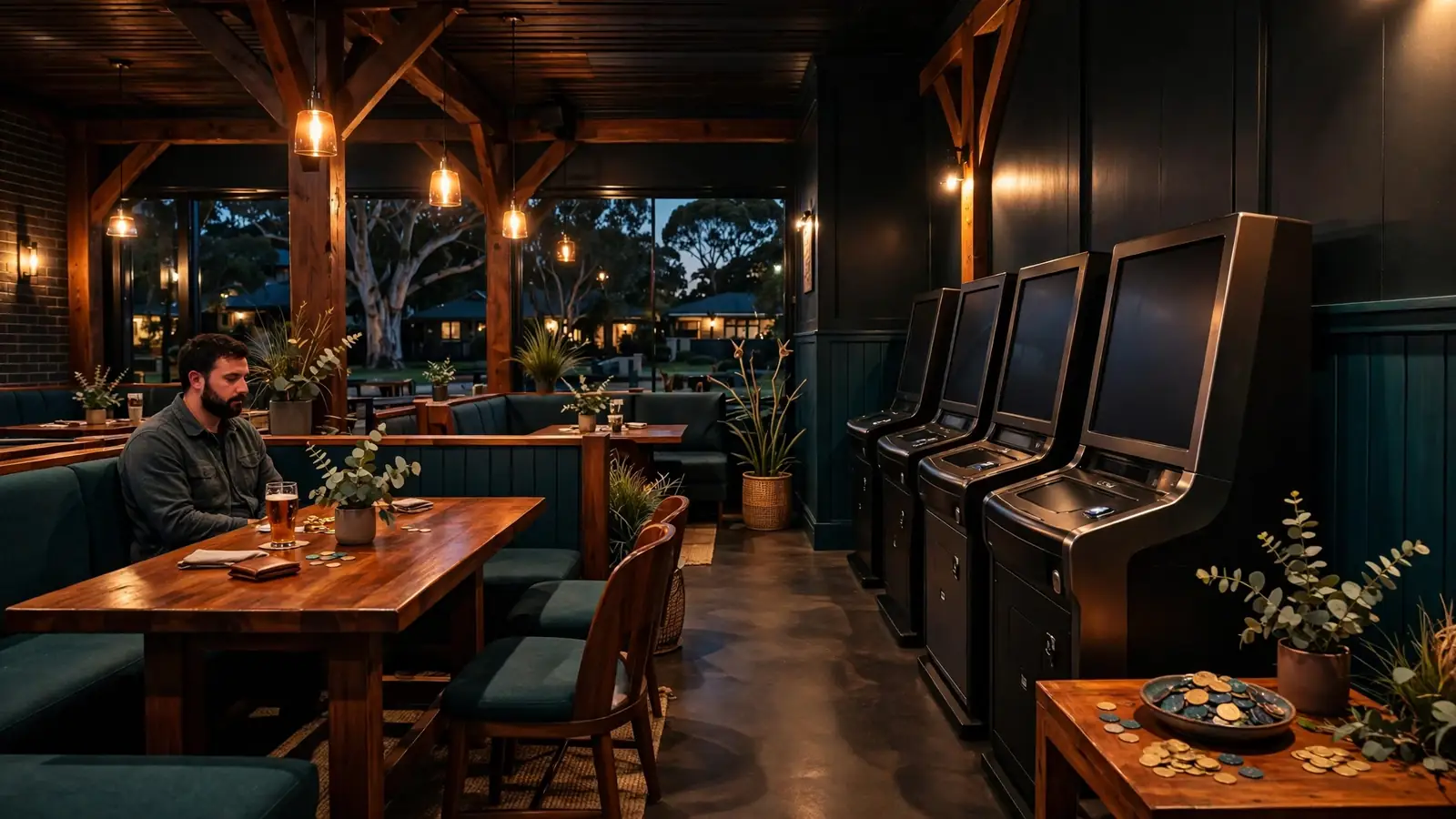
“Best” sounds like a tidy label, but it can mean several different things: a game someone enjoys, one with a particular style of play, or one believed to return more over time. Those are not the same judgement. If you are comparing pokies in South Australia, it helps to separate what can be checked from what no one can promise about your next spin.
The main limit is randomness. Each spin is an independent event, determined by a Random Number Generator. A result on one spin does not tell you what the next one will be, and a run of wins or losses does not make a particular outcome due. I find that distinction easy to lose sight of when a game has been quiet for a while. The machine does not keep score in the way a player might.
That is why a claim about the “best paying” game needs careful reading. A return percentage, often called RTP, describes a game setting rather than a personal forecast for an individual session. It cannot tell you what you will win, whether you will win at all, or when a particular outcome will appear. A high-sounding figure is not a promise of a better result on your next visit.
If you’re looking for pokies options in South Australia in 2026, this list gives you a starting point for checking the available details of each operator. Review the information that matters to you before deciding where to play.
Uptown Pokies
Uptown Pokies has operated since 2017 under a Curaçao licence, and its stated minimum deposit is A$20.
Neospin
Neospin is listed with a Curaçao Gaming Control Board licence, OGL/2023/176/0095, held by Hollycorn N.V.
Playfina Casino
Playfina Casino is listed under Curaçao eGaming, with Hollycorn N.V. and operation since 2017. Its minimum deposit is A$20–30, depending on the offer.
JustCasino
JustCasino is listed with a Curaçao Gaming Control Board licence.
SkyCrown
SkyCrown is licensed by the Tobique Gaming Commission. Its stated minimum deposit is A$30; payouts are listed at around 10–15 minutes for crypto and 1–5 days for fiat.
WinSpirit Casino
WinSpirit Casino is listed under Curaçao eGaming licence OGL/2024/923/0383, issued to Antillephone N.V. Its stated minimum deposit is A$30.
Ricky Casino
Ricky Casino lists a minimum deposit of A$20, or A$30 to qualify for the bonus. Payouts are listed as under an hour for crypto and 1–3 business days for PayID.
Wild Tokyo
Wild Tokyo is listed with a Curaçao licence and a minimum deposit of A$10. Its stated payout times are 30–60 minutes for crypto and 1–5 days for fiat.
7Bit Casino
7Bit Casino is listed as Curaçao-licensed and operated by Dama N.V.
MrPacho
MrPacho lists a minimum deposit of A$30. Its stated payout times are 30–120 minutes for crypto and 24–72 hours for fiat.
There is another wrinkle: some game providers let casinos select from different RTP settings for the same pokie. A specialist review has reported this practice, meaning that one title may not have the same return percentage in every place it is offered. So even if you have seen an RTP figure attached to a game, do not assume it automatically applies wherever that game appears. You would need information for the particular version and setting in use.
That is a narrow but useful point. It does not mean every casino chooses different settings, nor does it identify which setting a particular South Australian venue uses. It simply means a title name alone may not be enough to establish the return setting. If that detail matters to your comparison, look for clear information about the specific game version and setting rather than relying on a figure copied from somewhere else.
It also helps to decide what “best” means to you before comparing anything. If you mean a game you find enjoyable, that is a personal preference. If you mean a particular return setting, you need information that applies to the exact version available to you. If you mean the game most likely to pay during your session, no title can offer that assurance: independent spins do not become predictable because a game has a reputation.
The same caution applies when people talk about a machine being “hot” or “due.” Those descriptions may capture how a session feels, but they do not change the independence of the next spin. A previous result is not a signal that the next one will go a certain way. Nor does a loss establish that a win is waiting just around the corner. That story is tempting. It is still only a story.
For searches about South Australia casino pokies, CBD venues or games available in the state, keep the comparison modest. A list of titles, even if it looks authoritative, cannot by itself show which setting is attached to each title or predict a player’s result. And a claim that a game is the “best” needs a stated basis: best by what measure, and for which version? Without those answers, the label is doing more work than the evidence.
I would treat a “best pokies” list as a starting point for questions, not as a ranking of guaranteed returns. Check whether any stated RTP belongs to the exact game version being discussed, and whether the source explains how it knows the setting. If it does not, the number may not help you compare the options in front of you. A polished table cannot fix a missing detail.
Most importantly, don’t let a ranking turn into a prediction. RTP settings are not session forecasts, and a game’s past results do not determine its next spin. You can compare stated information where it is available, but you cannot use a title or a recent run to know which pokie will pay you. That is the honest boundary around “best” in South Australia: a possible comparison of documented settings and personal preferences, not a dependable way to call the next result.
A venue appearing in a map result is not the same as confirmation that its pokies are available when you arrive. Search results can be useful for finding somewhere to investigate, but an “open” label may not answer the practical question you have: whether the venue is open to visitors at that particular time. I would check the venue’s own current information before setting out, then confirm directly if the timing matters.
That small pause can save a wasted trip. Opening details shown in third-party listings may be incomplete or out of date, and a general venue-hours entry may not tell you whether every part of the venue is operating. Look for a recent update on the venue’s official website or its verified social page. If the information is unclear, call and ask plainly whether the venue is open now and whether its gaming area is operating.
This matters whether you are heading out early, later in the evening or making a spontaneous stop. A venue’s regular schedule may not reflect a change for a particular day, and a listing can leave out exceptions. I would not treat a result that says “open now” as a promise that nothing has changed since the listing was updated. Check the date and source, not just the label.
If you are deciding whether to leave home at a specific time, make the question specific when you contact the venue. Ask whether it is open to the public at that time, and whether the area you intend to use is accessible. A broad answer about the venue’s usual hours may not settle either point. If you are travelling with someone else, it is worth confirming any access arrangements you need rather than assuming they match the general listing.
Keep the plan flexible if you cannot get a clear answer. You can check again before leaving, or choose an alternative activity that does not depend on the venue being open. I would avoid making a long journey on the strength of an old directory entry or a brief snippet in a map app. Useful as a starting point; not the final word.
There is a separate question behind searches for pokies open early in South Australia: whether a particular venue is open at the time you have in mind. The wording of a search result cannot establish that for you. Look for an explicit current schedule and confirm it with the venue if the result is ambiguous. The same goes for late visits. A listing that provides general operating hours may not confirm the precise time you plan to arrive.
It also helps to separate venue hours from machine availability. Seeing a venue listed as open does not, by itself, confirm that its gaming area is open or that a specific service is available. Ask about the part that matters to your visit. That is more useful than relying on a general status badge, especially when you are planning around a narrow time window.
Opening hours tell you nothing about a pokie’s payout percentage. They are different details, and one cannot be used to infer the other. Each spin is a random event, so a venue being open at a particular time does not make a machine more likely to pay. If you are comparing games, the schedule is not a shortcut to their return settings; if you are planning a visit, the schedule is the thing to verify.
Before heading out, I would run through a quick check: is the information from the venue itself, does it clearly cover the day and time you intend to go, and does it answer whether the gaming area is operating? If not, contact the venue rather than filling in the gaps yourself. A phone call is less exciting than a confident map pin, but it is a better basis for a trip.
The useful habit is simple: treat online hours as a lead, not a guarantee. Confirm close to departure when the timing matters, and ask about the specific access you need. That keeps the plan grounded without assuming that every South Australian venue follows the same schedule.
“Near the airport” can mean different things on a map: close to a terminal, somewhere in the surrounding area, or simply within a broad search radius. If you’re looking for pokies as part of a trip in South Australia, treat that label as a starting point, not a promise of an easy stop.
Check the venue’s exact address and place it against your actual starting point: the terminal, your accommodation or the part of the CBD you plan to visit. A pin that looks nearby may still be awkward to reach, especially if your route depends on a particular road, pickup point or transport option. I’d check the route itself rather than judging by the map’s zoom level.
Then confirm the practical details with the venue directly. Make sure the address refers to the place you intend to visit, and that pokies are available there. A general listing can be incomplete or out of date; a venue’s own information is a better place to confirm the basics before setting off. No need to make a special trip on the strength of a vague map label.
The same goes for “near the CBD”. South Australia has more than one town and centre, and a listing that says “central” may not mean the centre you have in mind. Check the suburb or locality, street address and map pin together. If those details do not line up, pause before planning around them.
A “near me” result depends on the location your device is using and the area covered by the listing. If you’re travelling, that may not be where you are now—or where you’ll be when you want to go. Check that location access is sensible, then compare the result with a map and the venue’s own address. Don’t rely on the first result alone.
There’s another easy mix-up: searches can combine South Australia with a place name or state reference that points somewhere else. If a result mentions another state, a town you did not mean, or an airport without making the location clear, verify the state and address before following it. The wording on a screen is not a substitute for checking where the pin actually sits.
Before you leave, consider the whole journey rather than just the apparent distance. Is the venue accessible from your planned route? Can you get there and back using transport that suits your plans? Will a stop fit your schedule? Those are ordinary travel checks, but they matter more than a “nearby” label. A short-looking map route is not automatically a simple trip.
I also wouldn’t assume that a place described as a club, hotel or entertainment venue necessarily has the pokies you’re looking for. Confirm that point with the venue itself, along with the address. If you’re already at the airport or in the CBD, a quick check can save a detour; if you’re travelling from elsewhere, it can save you building the wrong stop into your day.
Searches for pokies near an airport, in central South Australia or near your current location are useful for narrowing an area. They do not establish how close a venue is in practice, whether it suits your route or whether the listing describes the right place. Check the location first. Then decide if the trip makes sense.
A website offering real-money pokies can look like an ordinary casino, with an account screen and a deposit button. That appearance does not make the service lawful in Australia. The Interactive Gambling Act 2001 prohibits companies from providing real-money online casino games, including pokies, to people physically located in Australia unless they hold a domestic licence. No Australian online casino licences have been issued, so there is no locally licensed online casino to choose.
That applies in South Australia just as it does elsewhere in the country. Being near the state border, or accessing a site from a South Australian address, does not change the national rules. The law is aimed at operators rather than individual players, but that distinction is not a safety guarantee. Offshore sites can still be difficult to access, and Australian authorities block illegal gambling sites.
The practical risk is clearest when money is involved. If an offshore casino refuses to release your winnings, you have no legal recourse in Australia against it. A polished interface, familiar payment options or claims about generous returns cannot give you the protection of a local licensing system. Nor does a welcome offer or a “no deposit” promotion change the legal status of the service.
Take care with claims about the best-paying pokies, high limits or maximum bets in South Australia. Those claims may draw attention to a site, but they do not establish that its games are available under Australian law or that a stated payout will be honoured. A headline about a bonus is not the same thing as a right to withdraw. Read the terms before sharing personal or payment details, and do not treat a deposit method as proof that a site is licensed, fair or transparent.
There is also a difference between being able to reach a page and having meaningful protection as a customer. Offshore operators may accept Australians despite the restrictions, but an accessible site is not an Australian-licensed one. If a dispute arises over a deposit, account closure or withheld winnings, the lack of Australian legal recourse is the point to keep in view—not how close the site feels to home. A screen does not make it local.
So if you are weighing online play against a venue visit, start with the legal position rather than the offer on the page. Real-money online pokies provided to people in Australia are prohibited services, and there is no Australian-licensed online casino. That is the limit to keep in mind before entering payment details. It is not a small-print detail.
When you’re comparing places to play pokies in South Australia, a useful question is not just what a venue offers, but what it has in place to respond when gambling becomes harmful. There are reported venue-level requirements around staff and record-keeping. They don’t tell you which venue is “best”, but they do give you something practical to ask about.
A report published by regionriverina.com.au describes a requirement taking effect from 1 July: a venue operating more than 20 gaming machines must have a dedicated responsible gambling officer (RGO) on duty while those machines are running. The threshold matters. The report does not say that every venue, whatever its size, must have a dedicated RGO on duty.
If you visit a venue with a larger gaming area, you can ask whether an RGO is on duty and how to contact them. That is a straightforward way to find the person responsible for this role, rather than assuming any staff member can answer questions about gambling harm. The presence of an RGO is a venue safeguard, not a promise that harm cannot occur or that a particular venue is safer for every person.
The same report describes a gambling incident register that venues are required to maintain. It is intended to record relevant occurrences, including situations where a patron’s behaviour suggests they may be at risk of gambling harm or already affected by it. In other words, the record is about incidents and signs of harm, not a public scorecard of venues or a guide to which machines pay best.
For a visitor, the register is not something to inspect as a customer. Its value is that the venue is expected to keep a record of concerning incidents rather than treating each one as if it happened in isolation. If you are worried about someone’s behaviour, speak to staff or ask for the RGO; you do not need to know how the venue’s internal record is kept.
These requirements are worth keeping in perspective. An officer on duty and an incident register are venue responsibilities, not a substitute for your own boundaries or a guarantee that staff will intervene in every situation. They also do not establish that one South Australian venue is better than another. A polished room or a large number of machines says little about how a venue handles a difficult moment.
When choosing where to go, you can ask calmly about the RGO and the venue’s process for responding to gambling-related concerns. Clear answers are more useful than broad claims about being a responsible venue. If the response is vague, that tells you something about what you can expect from the conversation.
A claim that pokies are available around the clock is more specific than a claim that a venue is open late. The building may have its own operating hours, while access to the gaming area or machines may follow a different schedule. Treat those as separate details, not one promise.
I wouldn’t assume that “24-hour” applies across South Australia, or even to every part of one venue. A result that uses the phrase may describe a particular place, an old listing or simply opening hours that extend late. It is not enough to plan a trip on its own. Check the venue’s own current information and confirm that pokies are available during the hours you intend to visit.
That distinction matters if you are travelling at an unusual time. A club, hotel or other venue might be accessible while its gaming area is not; equally, a listing may not make clear whether the stated hours cover the whole premises or just one service. The practical question is not only “Is the venue open?” but “Will the pokies be operating when I arrive?” Get both answers before setting out.
If the venue publishes separate hours for different areas or services, read the wording closely. If it doesn’t, contact the venue and ask directly about the gaming area and the time you have in mind. Don’t rely on an old screenshot, an unlabelled directory entry or a general statement about the venue. Hours can change, and an all-hours claim is the kind worth checking at the source.
There is another easy mix-up: “open 24 hours” does not necessarily mean every service is available continuously. A venue’s door access, food service and pokies can be governed by different schedules. A broad opening-hours label may leave that detail out. Look for wording that clearly refers to the pokies rather than assuming the whole premises shares one timetable.
If you cannot confirm machine availability, make a different plan rather than treating the phrase as a guarantee. It saves a wasted trip and avoids confusing a venue’s general hours with the hours that matter to you. Around-the-clock access is a venue-specific detail, not a safe assumption to carry from one South Australian listing to another.
Check the exact venue. Then go.
If you have Crown in mind while planning a South Australian outing, pause before treating the name as a local destination. A familiar brand in a search result does not establish that a casino, pokies room or particular service is in the state. Check the exact venue address and state before setting off; don’t let a broad result do the navigation for you.
Confirm the exact address through the venue's own current information and compare it with a map. Ensure the address refers to the specific place you intend to visit rather than a similarly worded page or a result from another state.
I’d confirm the location through the venue’s own current information, then compare it with a map or contact the venue if anything is unclear. Make sure the address is for the place you intend to visit, not a similarly worded page, an old listing or a result covering another state. That small check is less glamorous than planning the night, but it can save a wasted trip.
The same caution applies if you are looking for a particular room or asking where to find the “best” one. A brand name alone won’t tell you what is available at a specific address, what facilities are there, or whether the place suits your plans. Confirm the venue first, then check the details that matter to you directly with it. Don’t assume a description attached to one location applies to another.
Payout questions need the same care. A maximum cash payout is not something you can safely infer from a venue name or from a general description of pokies. If that detail affects your decision, ask the venue what rules apply to the particular machine and how any payout would be handled. Get the answer for the location you are actually considering. A headline or an old comment may leave out the conditions that matter.
I’d also keep the destination and the game-related details separate. First establish where the venue is; only then check what is available there and what its current terms are. If you cannot verify both, don’t build your plans around an assumption. There is no clever shortcut here.
This is not a claim about where Crown operates or what any Crown venue offers. It is simply a practical way to avoid confusing a brand with a South Australian address. Check the place, confirm the details, and travel only when you know you have the right destination.
If you’re considering a visit to a club in Adelaide’s CBD, the useful question is not which pokie looks most appealing. It’s what boundaries you want in place before you arrive. I’d decide that away from the machines, while it’s still easy to stick to a plan.
Responsible-gambling tools include deposit limits, loss limits and session time limits. Each puts a different kind of boundary around play: what you put in, what you’re prepared to lose, or how long you spend. Self-exclusion is another option for someone who wants to stop access to gambling rather than simply set a smaller limit.
These tools are not a way to make a pokie safer to win on. Every spin remains an independent random event; a limit changes your exposure, not the outcome. That distinction matters when a machine has been holding your attention for longer than you intended.
Before going to a club, check directly what tools it offers and how they work. Don’t assume that every venue has the same settings, enrolment steps or arrangements for self-exclusion. If you’re already there, ask staff where to find the information rather than trying to make a decision mid-session. A limit only helps if you understand what it covers and can follow it.
Boundaries on the total amount of money you put into a machine.
Boundaries on the amount you are prepared to lose during a session.
Boundaries on how long you spend playing to avoid losing track of time.
An option to stop all access to gambling entirely.
For someone searching for the best pokies in a South Australian CBD club, a safer measure is to define what “best” means for the visit: perhaps leaving on time, not exceeding a set loss limit, or choosing not to play. There’s no need to turn a night out into a test of willpower. Set a boundary before you start, and treat it as fixed rather than something to renegotiate after a run of spins.
If gambling is causing distress, stepping away and choosing self-exclusion may be more appropriate than adjusting a limit. You can ask the venue about its process, then take time to consider the decision without pressure. The practical point is simple: choose the tool that matches the boundary you need, and confirm how it applies before relying on it.
“Cashless” can mean paying at a physical venue without using notes or coins. PayID is different: it lets you send a bank transfer using an email address, mobile number or ABN through Australia’s New Payments Platform. It is a payment method, not a feature of a pokie machine.
That distinction matters when you are checking what a venue offers. A PayID transfer does not tell you whether its machines accept cashless payments, and it says nothing about a game’s fairness or return settings. I would check the venue’s own current information before assuming how payment works on site.
PayID also comes up in connection with online gambling deposits, but that is a separate issue. Under the Interactive Gambling Act 2001, companies cannot legally provide real-money online pokies to people in Australia without a domestic licence, and none have been issued. The law targets operators rather than players, but if an offshore site withholds winnings, you have no legal recourse in Australia. A payment method does not change that position.
There is also a location wrinkle in searches that pair Newcastle with South Australia: Newcastle is in New South Wales, not South Australia. Check the state and town carefully before making plans; similar wording does not mean the places or their venue arrangements are interchangeable.
For an in-person visit, think of cashless machine payments as a venue-specific question. For PayID, think bank transfer—and do not treat it as a green light for online play. Two different things.
When you’re trying to make sense of pokies in South Australia, it helps to separate general facts from claims that sound more definite than they are. The basic point is straightforward: a spin is an independent random event. A run of wins or losses does not tell you what the next spin will do.
That gives you a useful way to read confident claims about “the best” games or places to play. A ranking needs evidence that applies to the particular game and setting, not just a familiar name or a tidy-looking list. Some providers let casinos select different return settings for the same game, so the title alone does not settle the question. No magic label.
What can be said with confidence is narrower: pokies use random outcomes, and responsible-gambling tools such as deposit, loss and session-time limits, along with self-exclusion, are available as ways to set boundaries. Those are practical considerations, not proof that a particular game is more likely to pay.
Specific game recommendations, venue rankings and claims about who pays best need support tied to the exact game or venue. Without that, a list may look useful while leaving out the detail that matters. I’d treat broad promises cautiously and look for clear, relevant information rather than letting a bold headline do the thinking.
Keep your own limit in view, too. If playing stops feeling like entertainment, take a break or use self-exclusion support. You do not need to settle on a “best” pokie to make a sensible decision; sometimes the most useful result is knowing which claims you cannot rely on.
You must be at least 18 years old to gamble online in Australia.
Australian law prohibits companies from offering real-money online pokies to residents without a domestic licence, and none have been issued. The law targets operators, not players, so you can legally play on offshore sites that accept Australian players, but you have no legal recourse in Australia if one refuses to pay.
Yes. PayID is treated like any other qualifying deposit method at the recommended sites.
Yes. Some game providers allow casinos to choose from multiple RTP settings for the same game, so check the information for the specific version and setting.
There is no Australian-licensed online casino, and you have no legal recourse in Australia if an offshore casino refuses to pay your winnings. ACMA blocks access to illegal offshore gambling sites, but that does not provide a guarantee that an offshore casino will pay you.
Prepared by the VegasNow Casino editorial staff.