We use cookies to enhance your experience, analyze traffic, and personalize ads. Please accept or manage your preferences.
Local opening hours may not confirm that gaming facilities are operating, so current venue information matters.
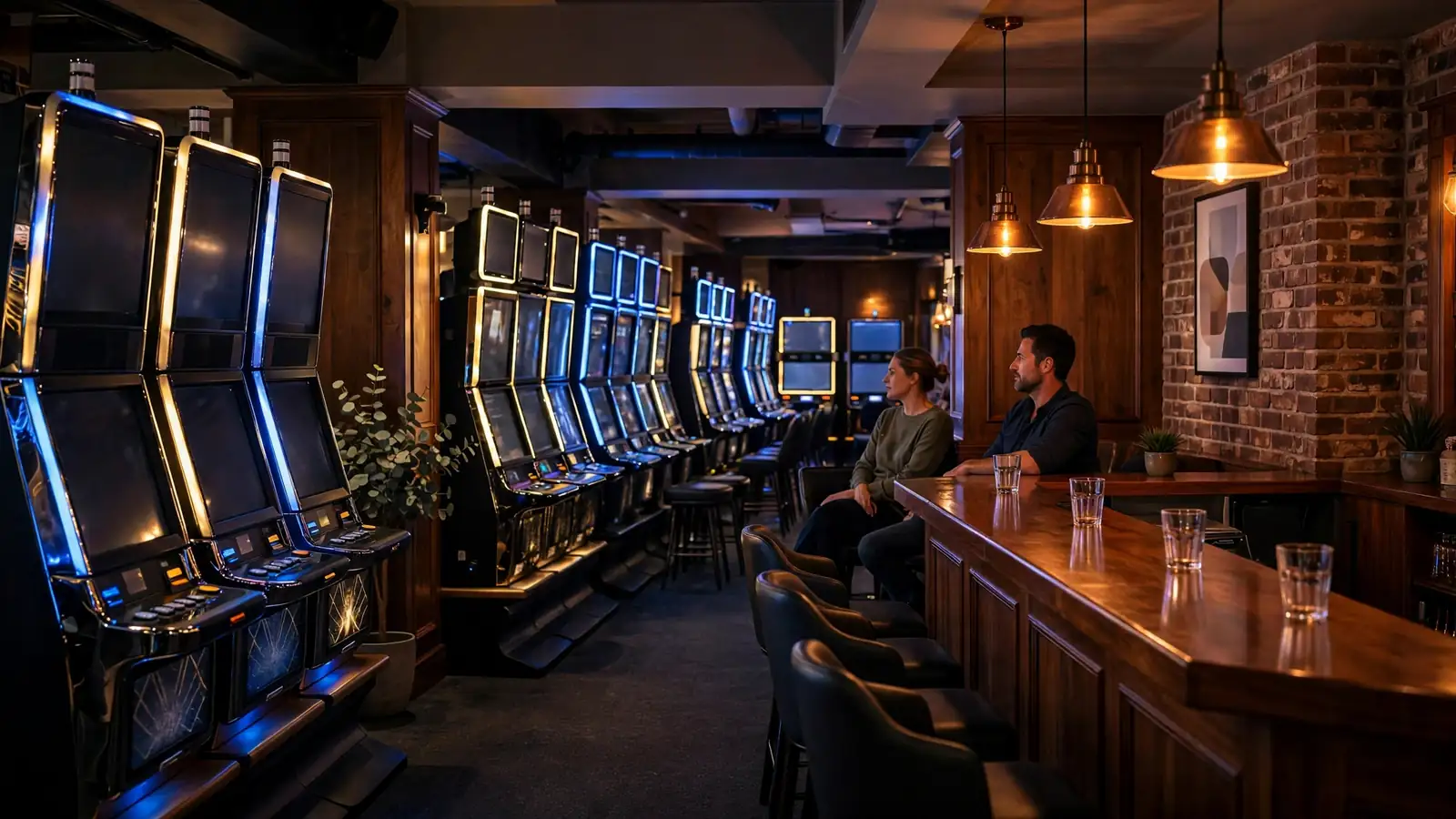
If you’re planning to play pokies in Geelong, the useful first check is a simple one: is the venue open, and are its gaming facilities available when you intend to arrive? A venue’s general opening hours do not necessarily tell you whether every part of it is operating. Before setting out, check directly with the venue using its current official contact details or information channels. If anything is unclear, ask rather than treating an old listing or a brief search result as confirmation.
That matters when you are trying to work out whether pokies are open now, or hoping to find somewhere open early or late. Search results can be out of date, and wording such as “open” may describe a venue rather than the gaming area. I wouldn’t plan a trip around a snippet alone. Confirm the details that matter for your visit: whether the venue is open at that time, whether its gaming area is operating, and whether there are any conditions that affect entry or play.
Be precise about what you’re checking. If you want to arrive at a particular time, ask about that time rather than asking only whether the place is “open”. If you’re already nearby, a quick call can save a wasted trip. If you are planning ahead, check again before leaving; details can change. No clever trick there. Just better than guessing.
It is also worth deciding what you want from the visit before you go. Are you stopping in briefly, or expecting to stay for a while? How much are you prepared to spend, and what will tell you it is time to leave? These are not questions a venue can answer for you, but having an answer in mind makes it easier to stick to your own plan once you arrive.
Responsible-gambling tools can help make that plan more concrete. Common options include deposit limits, loss limits and session time limits. A deposit limit can set a boundary on funds added to play; a loss limit can help keep losses within an amount you have chosen; a session time limit can prompt you to stop after the period you set. Self-exclusion is another option for someone who wants to prevent themselves from gambling at a venue or venues.
Before visiting, check what tools are available and how to use them. You can contact the venue and ask staff directly, or ask when you arrive. If you choose to set a limit, make sure you understand what it covers and when it takes effect. A limit only helps if it matches the boundary you actually want. Picking a number on the spot, while already caught up in the moment, is not much of a plan.
Self-exclusion is a more substantial step than setting a limit for a single visit. If you think you may need it, ask about the process before you start playing. You do not have to wait until a visit feels difficult to make an enquiry. And if you have already decided that gambling is causing harm, stepping away is more important than finding a venue that suits your schedule.
It can also help to make a practical plan for leaving. Decide in advance when you will stop, and avoid treating a win or a loss as a reason to keep going beyond that point. Take only the amount you have chosen to spend, and do not use money set aside for bills or essentials. These steps are not a guarantee against harm; they are ways to keep your own boundaries visible.
When you contact a venue, keep the call focused. Confirm the time you plan to visit and whether the gaming area is available then. Ask how to speak with staff about responsible-gambling tools if you need help. You do not need to explain your whole situation to make that enquiry. If the answer is vague, or you cannot confirm what you need, postpone the trip instead of filling the gaps with assumptions.
I’d treat a visit as a decision to make deliberately, not a last-minute search for a place that might be open. Check directly, decide your limits while clear-headed, and know how to ask for support before you play. A few minutes spent on those checks can spare you an unnecessary trip—and give you a firmer plan than “I’ll see how it goes.”
If you’re looking for online pokies options while in Geelong, this list gives you a concise reference to consider in 2026. Check each operator’s terms and suitability before you decide to play.
Uptown Pokies
Uptown Pokies has operated since 2017 under a Curacao licence. Its minimum deposit is A$20.
Neospin
Neospin is licensed by the Curacao Gaming Control Board under OGL/2023/176/0095, with Hollycorn N.V. identified as the operator.
Playfina Casino
Playfina Casino is licensed by Curacao eGaming, with Hollycorn N.V. and a start date of 2017 noted. Its minimum deposit is A$20–30, depending on the offer.
JustCasino
JustCasino is listed with a Curacao Gaming Control Board licence.
SkyCrown
SkyCrown lists a Tobique Gaming Commission licence and a minimum deposit of A$30. Its stated payout times are around 10–15 minutes for crypto and 1–5 days for fiat.
WinSpirit Casino
WinSpirit Casino is licensed by Curacao eGaming under OGL/2024/923/0383, with Antillephone N.V. identified. Its minimum deposit is A$30.
Ricky Casino
Ricky Casino lists a minimum deposit of A$20, or A$30 to qualify for the bonus. Its stated payout times are under 1 hour for crypto and 1–3 business days for PayID.
Wild Tokyo
Wild Tokyo lists a Curacao licence and a minimum deposit of A$10. Its stated payout times are 30–60 minutes for crypto and 1–5 days for fiat.
7Bit Casino
7Bit Casino is listed as Curacao-licensed and operated by Dama N.V.
MrPacho
MrPacho lists payout times of 30–120 minutes for crypto and 24–72 hours for fiat. Its minimum deposit is A$30.
When people look for the best-paying pokies around Geelong, the return percentage can seem like a tidy way to compare one game with another. It is useful information, but it is not a forecast of what will happen during your visit. A percentage describes a theoretical return across play over time, not a promised result for an individual player or a particular session.
That distinction is easy to lose when a figure is presented as if it settles the question. A higher stated return does not mean the next spin is more likely to pay, nor does it tell you how long you would need to play to see a particular result. The figure cannot tell you whether you will leave ahead. It is a broad measure of a game’s design, not a personal prediction.
There is another detail worth checking: the same pokie may not carry the same return setting everywhere. A specialist review reports that some providers give casinos a choice of RTP settings for a game. That means a title’s return percentage at one casino may differ from the setting used at another. Seeing the same name on two screens, then, does not necessarily mean you are comparing identical configurations.
If a venue or game listing gives a return percentage, check what it actually refers to. Is it tied to the specific game configuration, or is it a general figure with no clear link to that installation? If the setting is not stated, you cannot safely assume that a number found elsewhere applies to the pokie in front of you. A familiar title is not enough to establish the setting.
The other half of the picture is randomness. Each spin is an independent event determined by a Random Number Generator. A previous win does not make a loss due, and a run of losses does not mean a win is now owed. The machine is not keeping score in the way a person might; earlier spins do not dictate the next one.
That is why a return percentage cannot be used as a session plan. It does not tell you how many spins will happen before a payout, how large a win will be, or whether a short visit will resemble the theoretical return. Outcomes can vary from one stretch of play to another. The maths describes a long-run property, while you experience a finite run of spins. Those are not the same thing.
This matters when comparing options marketed as the best pokies in Geelong or the best-paying games in the city. Without comparable, clearly stated settings, a ranking based on return percentages can give a false sense of precision. Even where the figures are comparable, they still do not establish which game will pay you during a visit. No honest return figure can make that promise.
For the same reason, a high percentage is not a reason to raise your stake or keep playing until the machine “catches up”. It cannot tell you that a win is approaching. Set a spending limit before you begin, and treat any money spent as money you may not get back. If you find yourself trying to recover losses, stepping away is the more useful decision than chasing a number.
My practical rule is simple: treat RTP as background information, not a verdict. Check whether the setting relates to the exact game configuration, understand that each spin stands on its own, and do not read a theoretical return as a guarantee. That is a less exciting answer than a list of winners. It is also the honest one.
The legal position is easy to muddle: Australian law targets the company offering real-money online pokies, not the person who plays. Under the Interactive Gambling Act 2001, an operator cannot provide those services to people in Australia without a domestic licence. No Australian online-casino licences have been issued, so there is no Australian-licensed casino for real-money online play.
That distinction does not make an offshore site a safe or officially approved option. Australians are not liable simply for playing on an offshore site that accepts them, but the operator is still offering a service prohibited under Australian law. And if that operator refuses to pay winnings, an Australian player has no legal recourse in Australia to make it pay. The practical risk sits with you, while the legal prohibition sits with the operator.
This matters when you are looking for online pokies from Geelong, whether you have a particular venue in mind or are simply at home. A site’s Australian-facing language, a polished design or a claim about a no-deposit offer does not turn it into a locally licensed casino. Nor does the phrase “best paying” establish that a game will return more to you: a promise on a page is not a dependable way to judge either the operator or the outcome.
Access is another part of the picture. The Australian Communications and Media Authority (ACMA) blocks illegal offshore gambling sites, and internet service providers must comply with its blocklist. A site that appears accessible at one point may be blocked later. That is not a sign that the operator has been cleared or that your money is protected. It is a reminder that the legal and practical situation can change.
I would be wary of treating bonuses or high-limit claims as a reason to deposit. An offer does not solve the basic problem: there is no Australian-licensed online casino, and disputes with an offshore operator cannot be taken to an Australian court as a way to compel payment. Read the terms before considering any transaction, but remember that careful reading cannot create local protection where none exists.
There is also a limit to what self-exclusion tools can do across different operators. BetStop applies to Australian-licensed operators; it does not bind offshore sites. Since no Australian online-casino licences have been issued, do not assume that registering with BetStop will prevent an offshore casino from accepting you or sending you marketing. Treat it as a tool with a defined scope, not a universal block.
For someone in Geelong, “online” does not mean the same thing as playing at a local venue. It means dealing with a remote operator outside Australia’s domestic licensing framework, even if its website mentions Australian players or accepts registrations from here. A deposit going through is not proof of licensing, fairness or a reliable route to a withdrawal.
So the key distinction is plain: the law prohibits companies from offering real-money online casino games to people in Australia without a domestic licence; it does not make the individual player criminally liable for playing offshore. But legality for the player is not the same as consumer protection. If an offshore site withholds a payout, Australian legal remedies are not available to recover it. No local backstop.
If you’re trying to find pokies close to Geelong Airport, the CBD or North Geelong, start by pinning down the exact venue before planning the trip. A broad label such as “near the airport” doesn’t tell you whether a place is close enough for your plans, and a result mentioning Geelong doesn’t automatically mean it is in the centre of town.
I’d check a venue’s own listing for its street address, then enter that address into a map app from your actual starting point. That gives you a route to assess rather than a vague impression of proximity. Check that the listing names the venue itself, not just a suburb, shopping area or nearby landmark. If the address is unclear or listings disagree, contact the venue before setting out. A wrong pin can turn a simple trip into a detour.
The airport and the CBD are different reference points, so treat them as separate journeys. Work out whether you’re travelling from the airport, staying in the city centre or coming from another part of Geelong, then check the route for that starting point. North Geelong is another distinct area; a result associated with it should not be assumed to be close to either the airport or the CBD. A familiar place name is not a travel estimate.
Map results can help you compare addresses and routes, but they are not a substitute for confirming that a venue is the one you intend to visit. Check the venue’s own contact details and address, and make sure the map pin matches. If you’re relying on public transport, a taxi or a lift, check the relevant journey separately. I wouldn’t plan around a claimed travel time unless it comes from a current route calculation for your departure point.
The same care applies when you’re already nearby and looking for pokies near you. Your location, the exact venue address and the route you choose all matter; a search result alone can’t settle those details. Narrow the search to the area you mean, identify a specific venue, and confirm its address before you go. That’s less exciting than picking the first result, but it saves the familiar “wrong side of town” surprise.
If you’re travelling with someone else, agree on the destination by address rather than saying only “the airport one” or “the CBD one”. Those descriptions can mean different things to different people. For any gambling in Australia, you must be at least eighteen. Keep the trip separate from assumptions about what a venue offers: confirm the destination first, and make your own decision about whether to visit.
Geography is the practical part here. “Near Geelong” can cover very different starting points and routes, so use a confirmed street address and a route checked for your own journey—not a label that merely sounds close.
When you’re weighing up a venue in Geelong, the useful distinction is not which one has the biggest room or the most machines. It’s whether the venue has clear support in place if gambling stops feeling manageable. The rules described in a report by regionriverina.com.au set out responsibilities for venues above a particular size; they don’t amount to a ranking of local clubs.
Under the reported requirement, a venue with more than 20 gaming machines must have a dedicated responsible gambling officer (RGO) present whenever those machines are operating. The report says the change takes effect from 1 July. That gives you a practical thing to ask staff about: who is the RGO on duty, and how can you speak with them? You should not have to guess which person to approach if you want help or need to raise a concern.
The same report describes a one-month grace period for venues to bring in the officers and remove signage. That transition period is not a reason to assume every venue has already made the change. If the arrangement matters to you, ask directly rather than treating a sign, or its absence, as proof that support is available.
There is also a requirement for venues to keep a gambling incident register. It is intended to document events, including occasions when a patron’s behaviour suggests they may be at risk of gambling harm or already affected by it. That is a venue record, not a public list of patrons. For you, its relevance is that staff are expected to take concerning situations seriously and record them, rather than treating them as ordinary background activity.
Signage around gambling areas also deserves a look. As a compliance measure, remove signs directing patrons to gaming lounges if they are within eyeshot of ATMs or EFTPOS terminals; likewise, remove signs directing patrons to ATMs when they are within eyesight of gaming machines. If you spot a sign in one of those positions, you can raise it with staff. Don’t assume that every sign has been checked simply because it is displayed in a venue.
These obligations can help you assess how a venue handles harm, but they do not tell you that a particular Geelong venue meets every requirement, or that its machines are better than another venue’s. A venue’s size matters to the RGO rule; the rule does not turn a larger gaming room into a safer or more suitable choice for every person.
If you’re uncomfortable with what you see, you can leave. If you want to ask for support, ask staff for the RGO or another responsible person before continuing to play. A straightforward answer is useful; evasiveness is worth noticing. No ranking can do that check for you.
If you’re hoping to find pokies running around the clock in Geelong, don’t treat a search result saying “open now” as confirmation. That label can be based on information that has changed, or it may not tell you whether the gaming area is open at the time you plan to arrive. A venue’s general opening hours and the hours for its pokies are not necessarily the same thing.
I’d check the venue’s own current information before leaving. Look for a specific statement about gaming hours, not just a general opening time. If the details are unclear, call and ask whether the pokies are operating when you expect to visit. It’s a small step, but better than making the trip on the strength of a snippet.
Be precise about what you’re checking. A venue may be open for food or drinks while its gaming area is unavailable, or the published hours may refer to a different part of the premises. If you’re planning a late visit, ask directly about the time you intend to arrive and whether the pokies will still be operating then. “Open” is not always the whole answer.
Online listings can be useful for finding contact details, but I’d treat them as a starting point rather than a promise. Check the date of any update if one is shown, and compare the listing with the venue’s own website or social media. If those sources disagree, a direct call is the clearest way to settle it. Search snippets are convenient. They are not the venue.
The same goes for claims that a Geelong venue offers all-night play. Don’t assume that wording means the pokies themselves are available at every hour, or that the information is still current. Confirm the gaming hours with the venue before setting off. If you can’t get a clear answer, make a different plan rather than relying on a guess.
I also wouldn’t read a blank or vague listing as proof that a venue is closed, or that it stays open late. It simply leaves you without a reliable answer. Check directly, especially around public holidays or other days when opening arrangements may differ. The key detail is not whether a page says “open”; it is whether the gaming area will be operating when you arrive.
For any visit, use the venue’s own current information and confirm anything that matters by phone. That is the sensible way to check Geelong pokies opening hours, including any claim of around-the-clock availability. No guessing.
A Crown-branded casino or pokies room in Geelong should not be assumed just because those words appear together in a listing or a search result. I can’t confirm a Crown-operated venue in Geelong. The name alone does not establish that one is there.
That distinction matters if you are planning a visit. A result might combine a brand name with a city, refer to somewhere else, or simply repeat wording from another page. Before travelling, look for a direct venue address and confirm with the venue itself that it operates there and has the facilities you are asking about. If those details cannot be confirmed, treat the claim cautiously. A familiar name is not an address.
The same applies to requests for pokies at a “Crown” venue in Geelong. I can’t confirm that such a room exists locally, so I can’t sensibly describe its machines, rank it against other rooms or call it the best pokies room in town. A ranking without confirmed venues would be theatre, not useful local advice.
There is also a difference between finding a venue and knowing what a particular machine will pay out. A search phrase about a maximum cash payout does not tell you the payout conditions at a venue, or even identify a specific machine. If you are already at a venue, ask staff how that machine’s payout works and what steps apply to a larger win. Check the information provided for the machine rather than relying on a number copied into a listing.
I would keep the question narrow: is there a confirmed Crown-operated venue at the Geelong address you have in mind? If the answer is unclear, get the address and venue identity confirmed before setting off. If you only want a pokies room, search for a named local venue and verify that venue directly; don’t let the Crown name fill in details that have not been established.
That is less exciting than a neat recommendation. It is also less likely to send you across town for a place that may not be there.
If you’re looking for a club in Geelong’s CBD with pokies, separate the venue question from the machine question. A club may be a place to visit, but that alone tells you nothing about which pokies it has or whether a particular machine suits you. I wouldn’t treat a “best” label as a useful guide unless it comes with clear, checkable details.
For a CBD visit, check the venue’s own current information before you set out, and contact it directly if you need to confirm whether pokies are available. A listing, map pin or old mention can point you in the right direction, but it is not a promise that a venue’s facilities or arrangements have stayed the same. Specifics matter.
If you’re comparing machines, remember that each spin is an independent random event. A run of wins or losses does not tell you what the next spin will do. Some providers let casinos choose between different return settings for the same game, so a familiar title is not, by itself, proof that the settings match elsewhere. “Best” is a slippery word.
Self-exclusion is a separate, practical consideration if you want to stop yourself from gambling at venues. You can also look for responsible-gambling tools such as deposit limits, loss limits and session time limits. If you are considering self-exclusion, ask the venue how its process works and what it covers before relying on it. The detail matters more than a label on a page.
I’d keep the decision simple: confirm the CBD venue directly, decide whether you want to enter a gaming area at all, and set a boundary before you go. If you’re unsure whether a venue’s self-exclusion arrangements fit your situation, ask staff rather than guessing. A search result can help you find a place; it cannot make the choice for you.
When Parkes appears alongside Geelong in a request for pokies, the wording alone does not tell you what the connection is. It could be a place name, part of a venue name, or simply an unrelated term carried into the same search. Without a clear, independently checkable address or venue identity, there is no sound basis for treating it as a Geelong location.
I wouldn’t turn that phrase into a recommendation. A result that repeats the words is not proof that a venue exists there, that it has pokies, or that it is connected to Geelong. Search pages can join terms in ways that look meaningful but leave the actual location unresolved. A confident description built on that ambiguity would be less useful than saying plainly: the name needs checking.
If you have a particular listing in mind, look for the venue’s full name and street address, then see whether the venue itself confirms that information through an official page or direct contact. Check that the address is actually in the area you intend to visit, rather than relying on a heading, snippet or map label that may be showing a different place. If the listing has no clear identity or address, don’t assume the missing detail.
That distinction matters if you are trying to find the best pokies in Geelong. A phrase containing both Parkes and Geelong does not establish that Parkes is a suburb, district or venue in Geelong, and it does not establish that any particular club offers gaming machines. I can’t responsibly fill in those blanks with a guessed local connection.
Treat Parkes as an unresolved clue, not a destination. Confirm the name and location first; only then can you decide whether the place is relevant to your plans. If you cannot match it to a clearly identified Geelong venue, set that result aside rather than travelling on an assumption. A little checking beats a wasted trip.
“Cashless” can mean different things in a conversation about pokies. You might be asking whether a machine accepts a cashless way to play, or whether a venue has cashless facilities more broadly. Those are not the same claim, and the wording alone does not establish that any particular Geelong venue has cashless pokies.
I’d keep the question narrow when checking: ask the venue what it means by cashless, whether the arrangement applies to its pokies, and what payment methods it accepts. Get the answer from the venue itself rather than treating a search result or a general description as confirmation. Payment arrangements can be venue-specific.
There is another wrinkle in “Newcastle-Geelong”. The two place names do not, by themselves, identify one venue or show that the information is about Geelong. It could be a comparison, a broader regional reference, or simply mixed-up wording. Don’t take it as evidence that a Newcastle venue is in Geelong, or that a detail about one place applies to the other.
If you’re looking for a particular location, check the venue’s own name and make sure the information refers to Geelong before relying on it. If you’re asking about cashless access, confirm that separately; a venue’s general payment information may not explain how its pokies work.
That’s the useful distinction: place first, payment arrangement second. The phrase on its own settles neither. No guesswork needed.
Yes, Australian players can legally play on offshore sites that accept them, but no Australian-licensed online casino exists. The law targets operators offering real-money online pokies without a domestic licence, and players have no legal recourse in Australia if an offshore casino withholds winnings.
It is the amount you must wager before you can withdraw bonus-related winnings. For example, a $500 bonus with a 40x requirement means $20,000 in bets; if the requirement applies to a $500 deposit plus a $500 bonus at 35x, it means $35,000 in bets.
Compare the bonus with the wagering needed to unlock its winnings, and check for cash-out caps. For example, a $500 bonus with a 40x requirement requires $20,000 in bets, while a 35x requirement on a $500 deposit plus a $500 bonus requires $35,000.
Yes, some game providers let casinos choose among multiple RTP settings for the same pokie. Check the return percentage for the specific game configuration at that casino; the same game title may have a different setting elsewhere.
Prepared by the VegasNow Casino editorial staff.